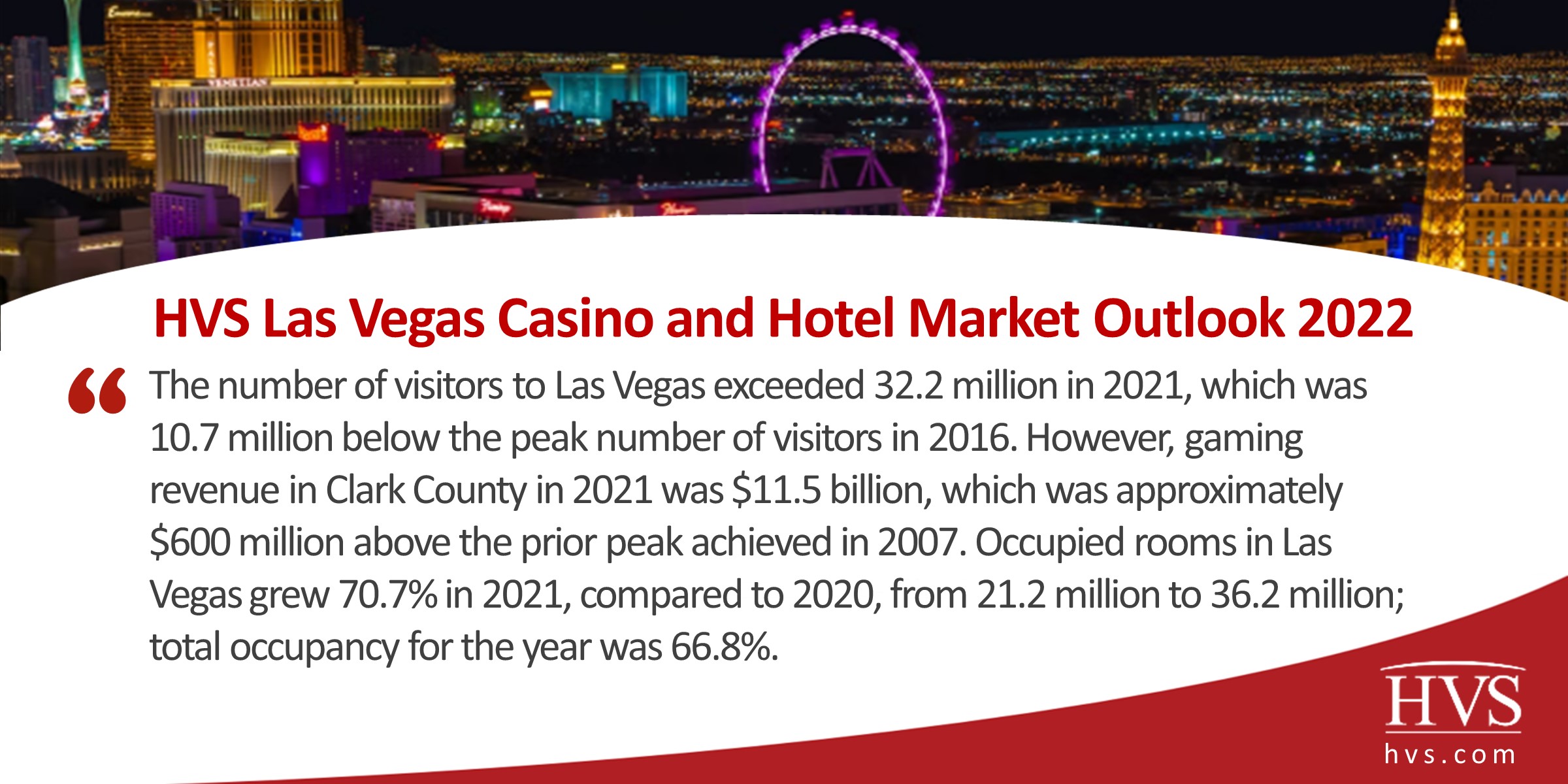
The number of visitors to Las Vegas exceeded 32.2 million in 2021, which was 10.7 million below the peak number of visitors in 2016. However, gaming revenue in Clark County in 2021 was $11.5 billion, which was approximately $600 million above the prior peak achieved in 2007. Occupied rooms in Las Vegas grew 70.7% in 2021, compared to 2020, from 21.2 million to 36.2 million; total occupancy for the year was 66.8%.
The Las Vegas market benefited from pent-up demand, government stimulus checks, limited international travel options, increased vaccination rates, and the easing of COVID-19 restrictions during the first half of 2021. However, major COVID-19 metrics notably surged during the summer, and indoor masking rules have been reimplemented in Clark County.
The impact of the COVID-19 pandemic on the timeshare industry was significant. However, a survey conducted by HVS Shared Ownership Services, as well as other sources for the industry, indicate a generally optimistic outlook for a recovery and rebound.
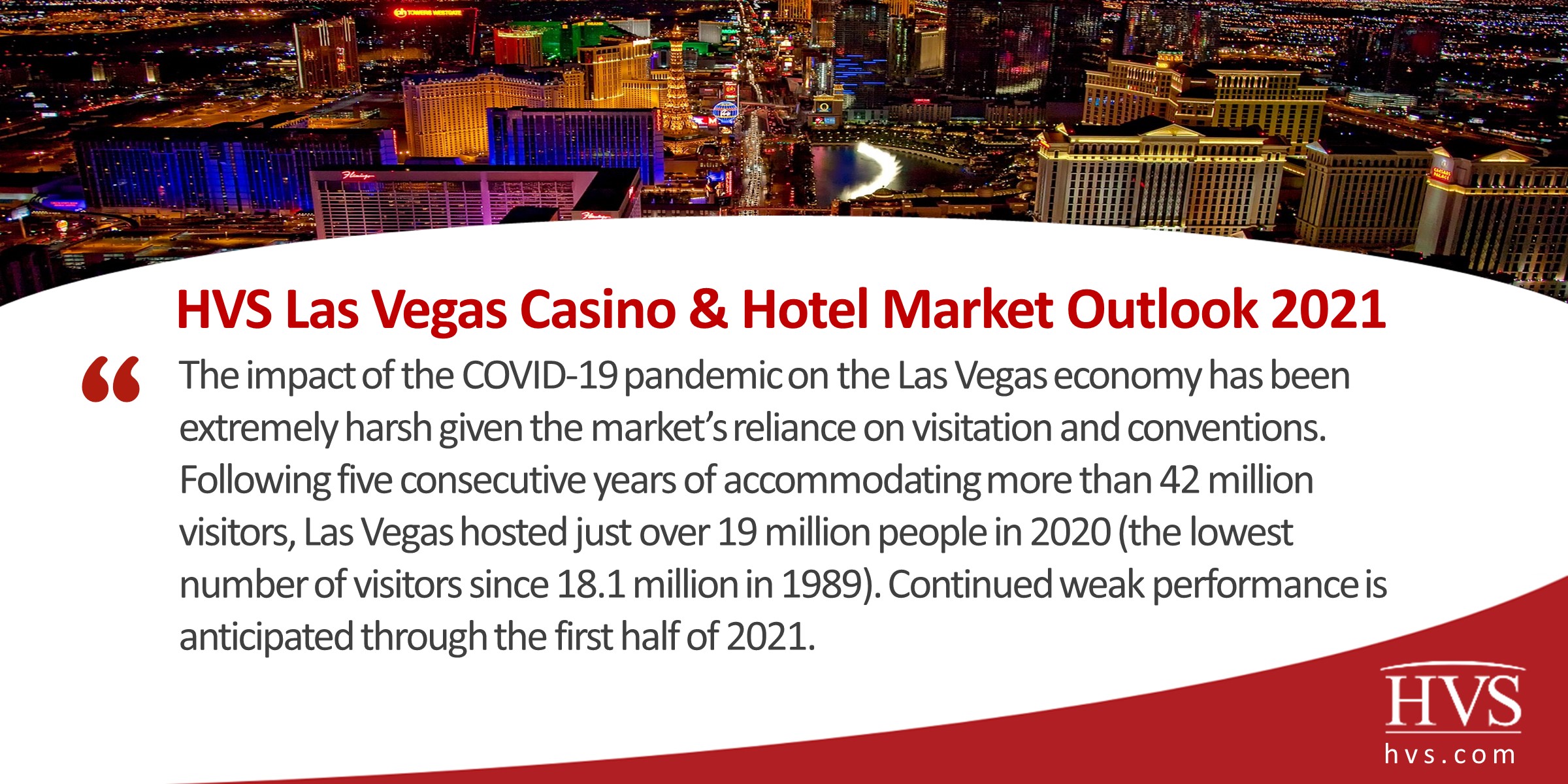
The impact of the COVID-19 pandemic on the Las Vegas economy has been extremely harsh given the market’s reliance on visitation and conventions. Following five consecutive years of accommodating more than 42 million visitors, Las Vegas hosted just over 19 million people in 2020 (the lowest number of visitors since 18.1 million in 1989). Continued weak performance is anticipated through the first half of 2021.
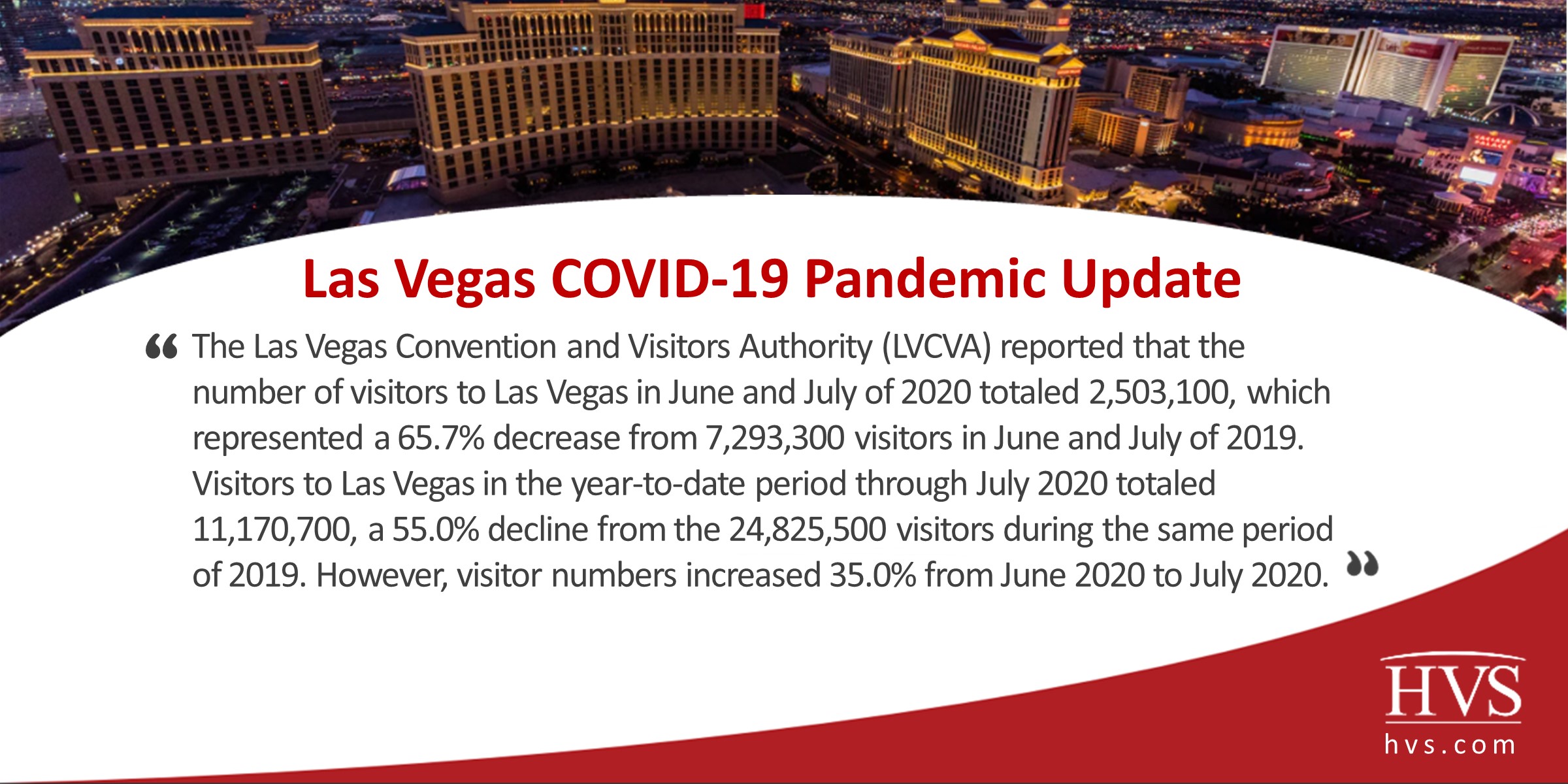
Nevada began its emergence from the COVID-19 pandemic shutdown on May 9, 2020, after Nevada’s Governor Steve Sisolak authorized certain businesses, including restaurants and retail establishments, to reopen with limitations. Nevada’s casinos were allowed to reopen on June 4, 2020, with restrictions. This article provides an update of the status of the Las Vegas market since Nevada’s casinos were allowed to reopen.
Governor Sisolak authorized certain businesses, including restaurants, barbershops, hair salons, and most retail businesses, to reopen with limitations beginning May 9, 2020, and Nevada began its emergence from the pandemic shutdown. Nevada’s casinos were allowed to reopen on June 4, 2020, with restrictions. While the pandemic is far from over, this article examines some of the differences observed in casinos in the Las Vegas market since reopening and what has been learned thus far.
Three U.S. major professional sports teams—the Vegas Golden Knights of the National Hockey League, Las Vegas Aces of the Women’s National Basketball Association, and Las Vegas Raiders of the National Football League—are based in Las Vegas. The importance of sporting events for the Las Vegas market extends beyond serving as the home for these professional teams. The return of sports will contribute to Las Vegas’ eventual recovery from the impact of the COVID-19 pandemic.
The COVID-19 pandemic has placed at risk the substantial investment of state and local governments in the tourism and hospitality industries. Publicly funded destination marketing organizations (“DMOs”), tourism agencies, and convention centers face budget shortfalls, staffing reductions, and growing financial uncertainty. Targeted federal aid is urgently needed to support DMOs, tourism agencies, and convention centers whose work is critical to the recovery of vital sectors of the US economy.
With the Coronavirus scare gaining momentum, this article revisits the 2003 SARS pandemic, seeking insight into the potential impact on individual markets and travel as a whole.
HVS C&V leaders offer the pulse of their markets heading into the fall season. Out of 23 markets discussed, ten are rated as hot, nine are rated as mild, and the remaining four are rated as cooling.