After a full RevPAR recovery in 2022, recessionary concerns and the capital markets are causing headwinds for the industry. What can hoteliers expect in 2023 and beyond? This article presents our latest forecast and insights.
We have written thousands of articles about all aspects of hospitality, including valuations, investing, lending, operations, asset management, and much more.
After a full RevPAR recovery in 2022, recessionary concerns and the capital markets are causing headwinds for the industry. What can hoteliers expect in 2023 and beyond? This article presents our latest forecast and insights.
Although current capital market terms are putting downward pressure on values, the full impact of these conditions is tempered by the expectation of a return to more favorable terms in the relatively near future. The opportunity to refinance in the near-to-mid term provides an equity investor with a return of a portion of their initial investment, which supports a lower blended discount rate—and higher value—than indicated by a weighted average cost of capital based on current mortgage terms.
The New York City borough of Manhattan has historically been among the strongest, most diverse, and most dynamic hotel markets in the world. Now almost one year into the COVID-19 pandemic, sustained business closures in New York City have resulted in little to no improvement in lodging performance since the pandemic began. When will New York begin to see meaningful recovery, and how long before the lodging performance returns to pre-pandemic levels?
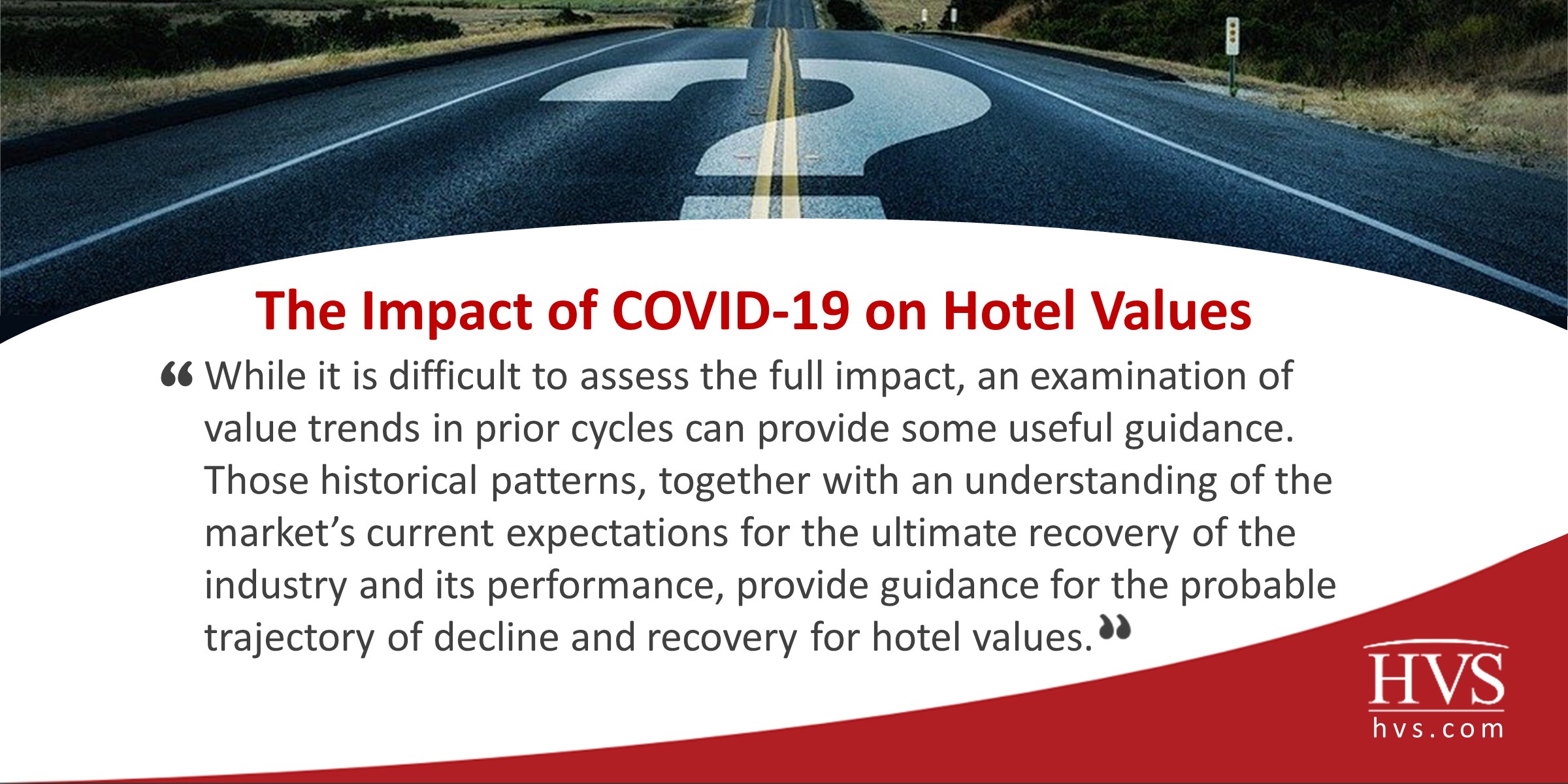
The COVID-19 pandemic and the related restrictions on travel, business activity, and individual movement are having an unprecedented impact on our industry and economy. Hotel owners, operators, lenders, and investors are all facing greater challenges than ever anticipated, as they grapple with plummeting occupancy, average rate (ADR), and RevPAR and seek solutions to mitigate the impact on EBITDA.
With the Coronavirus scare gaining momentum, this article revisits the 2003 SARS pandemic, seeking insight into the potential impact on individual markets and travel as a whole.
The 41st NYU International Hospitality Industry Investment Conference wrapped up on June 4, 2019, and the overall sentiment of the event was one of caution, a shift from a sentiment of cautious optimism at conferences earlier in the year.
Hotel experts and stakeholders convened in Boston to present positive trends in U.S. hotel lending, development, performance, and values. For Boston-area hoteliers, the potential impacts of a 2024 Olympics bid took center stage.
The outlook for 2010 is for strong demand growth, and the industry is expected to regain stabilized levels of operation by 2014. Hotel values are also improving, fueled by both stronger fundamentals and improving investment market conditions.
Diante de um período de euforia econômica no país, o investidor hoteleiro deve ter cautela para escolher o melhor mercado a ingressar. Entenda por que mercados com barreiras de entrada a novos hotéis costumam ser os mais atraentes para se investir.
A review of the differentials in capitalization rates based on location and property type over a ten year period.
We have written thousands of articles about all aspects of hospitality, including valuations, investing, lending, operations, asset management, and much more.
After a full RevPAR recovery in 2022, recessionary concerns and the capital markets are causing headwinds for the industry. What can hoteliers expect in 2023 and beyond? This article presents our latest forecast and insights.
Although current capital market terms are putting downward pressure on values, the full impact of these conditions is tempered by the expectation of a return to more favorable terms in the relatively near future. The opportunity to refinance in the near-to-mid term provides an equity investor with a return of a portion of their initial investment, which supports a lower blended discount rate—and higher value—than indicated by a weighted average cost of capital based on current mortgage terms.
The New York City borough of Manhattan has historically been among the strongest, most diverse, and most dynamic hotel markets in the world. Now almost one year into the COVID-19 pandemic, sustained business closures in New York City have resulted in little to no improvement in lodging performance since the pandemic began. When will New York begin to see meaningful recovery, and how long before the lodging performance returns to pre-pandemic levels?
The COVID-19 pandemic and the related restrictions on travel, business activity, and individual movement are having an unprecedented impact on our industry and economy. Hotel owners, operators, lenders, and investors are all facing greater challenges than ever anticipated, as they grapple with plummeting occupancy, average rate (ADR), and RevPAR and seek solutions to mitigate the impact on EBITDA.
With the Coronavirus scare gaining momentum, this article revisits the 2003 SARS pandemic, seeking insight into the potential impact on individual markets and travel as a whole.
The 41st NYU International Hospitality Industry Investment Conference wrapped up on June 4, 2019, and the overall sentiment of the event was one of caution, a shift from a sentiment of cautious optimism at conferences earlier in the year.
Hotel experts and stakeholders convened in Boston to present positive trends in U.S. hotel lending, development, performance, and values. For Boston-area hoteliers, the potential impacts of a 2024 Olympics bid took center stage.
The outlook for 2010 is for strong demand growth, and the industry is expected to regain stabilized levels of operation by 2014. Hotel values are also improving, fueled by both stronger fundamentals and improving investment market conditions.
Diante de um período de euforia econômica no país, o investidor hoteleiro deve ter cautela para escolher o melhor mercado a ingressar. Entenda por que mercados com barreiras de entrada a novos hotéis costumam ser os mais atraentes para se investir.
A review of the differentials in capitalization rates based on location and property type over a ten year period.
Robust demand in urban centers continues to drive Canadian hotel values despite high interest rate environment.