
With consistent RevPAR growth above expectations this year, our RevPAR growth forecast for 2026 reflects a strong 4.5%, a bounce back from the 0.3% decline in 2025. We expect continued favorable RevPAR growth this year, but at levels moderately below those posted this summer, as June through mid-August figures benefited from both World Cup events and heightened vacation travel. In the trailing-28-day period ending August 15, national RevPAR was up 6.8%, according to STR/CoStar (July RevPAR was up 8.2%). The June/July growth was nearly double the already-robust increase for late April through May. The strong summer months have continued the positive momentum recorded throughout the year, with the hotel industry benefiting from healthy and relatively steady RevPAR growth since February.
The greatest RevPAR growth, weighted heavily towards ADR gains, has occurred in the luxury and upper-upscale hotel categories. RevPAR growth has been more modest in the upscale and upper-midscale categories and minimal in the mid-rate category. RevPAR has been essentially flat in the economy segment. A strong stock market and steady economy are bolstering consumer confidence at the upper end of the market, where income and savings levels support significant discretionary spending. These consumer and corporate budgets allow for short-term bookings at premium rates (on both a transient and group basis).
Several forces came together to drive RevPAR growth this year. The FIFA World Cup delivered a significant lift, with many host cities posting RevPAR increases of 15% to more than 20%. Even non-host markets benefited as fans gathered for watch parties and themed events. Beyond the tournament, busier convention calendars supported demand in many cities, Minneapolis experienced a notable influx of hotel guests during heightened ICE enforcement activity in early 2026, and the Bay Area continued to benefit from investment and activity tied to the booming AI sector, along with other market-specific drivers across the country.
Continued instability in the Middle East, coupled with uncertainty surrounding the durability of ceasefire and peace efforts, has led some U.S. travelers to favor domestic vacations over international travel this year. Combined with a rise in "revenge travel" following the cancellation or postponement of trips during a tumultuous 2025, this shift has helped boost RevPAR, particularly in the luxury, upper-upscale, and upscale segments that include most resort properties. ADR growth has also remained elevated, supported by persistent inflation in the 3% to 4% range and the need for hotel operators to offset rising operating costs.
Our current U.S. forecast is as follows.
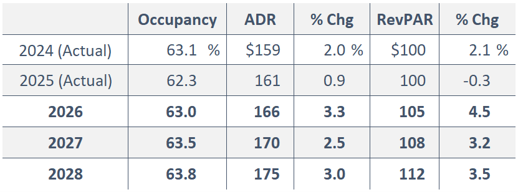

Looking ahead, the second half of August tends to be a quieter travel period as families shift their focus to the start of the school year. A busy fall convention calendar is expected to drive demand for September through November, supporting our outlook for continued strong travel activity and ADR growth through the remainder of 2026. While ADR growth is expected to moderate in 2027 as the one-time lift from the World Cup fades, the industry's outlook remains positive. The industry's next major opportunity is already in sight, as the 2028 Summer Olympics in Los Angeles are expected to attract millions of visitors and stimulate hotel demand across Southern California.
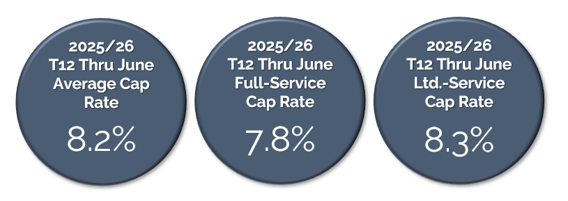
Hotel transaction activity has remained relatively measured this year, reflecting the uncertainty that persisted throughout much of 2025 and into early 2026. That could soon change. As hotel performance strengthens and cash flows improve, buyers and sellers may find more common ground on value, paving the way for increased transaction activity through the remainder of the year. Meanwhile, the industry's average cap rate fell to 7.7% in the second quarter of 2026. Although fewer properties are trading, the hotels that are selling tend to be more upscale assets that command premium pricing, helping push the trailing-twelve-month (T12) cap rate to 8.2%.
Source: MSCI Real Capital Analytics (Closed U.S. Hotel Transactions)
The second half of 2026 may bring a shift in seller expectations. As more owners accept today's pricing environment, average cap rates are expected to move modestly higher. Many sellers are increasingly recognizing that waiting for significantly better market conditions may not be the most effective strategy, especially with inflation continuing to put pressure on interest rates.
In the current environment, stabilized and near-stabilized hotels generally support cap rates in the 8.0% to 8.5% range, with exit cap rates roughly 100 basis points higher. Economy, extended-stay, and luxury assets will likely trend below this benchmark, while older hotels facing major renovation needs will likely trend above this mark.
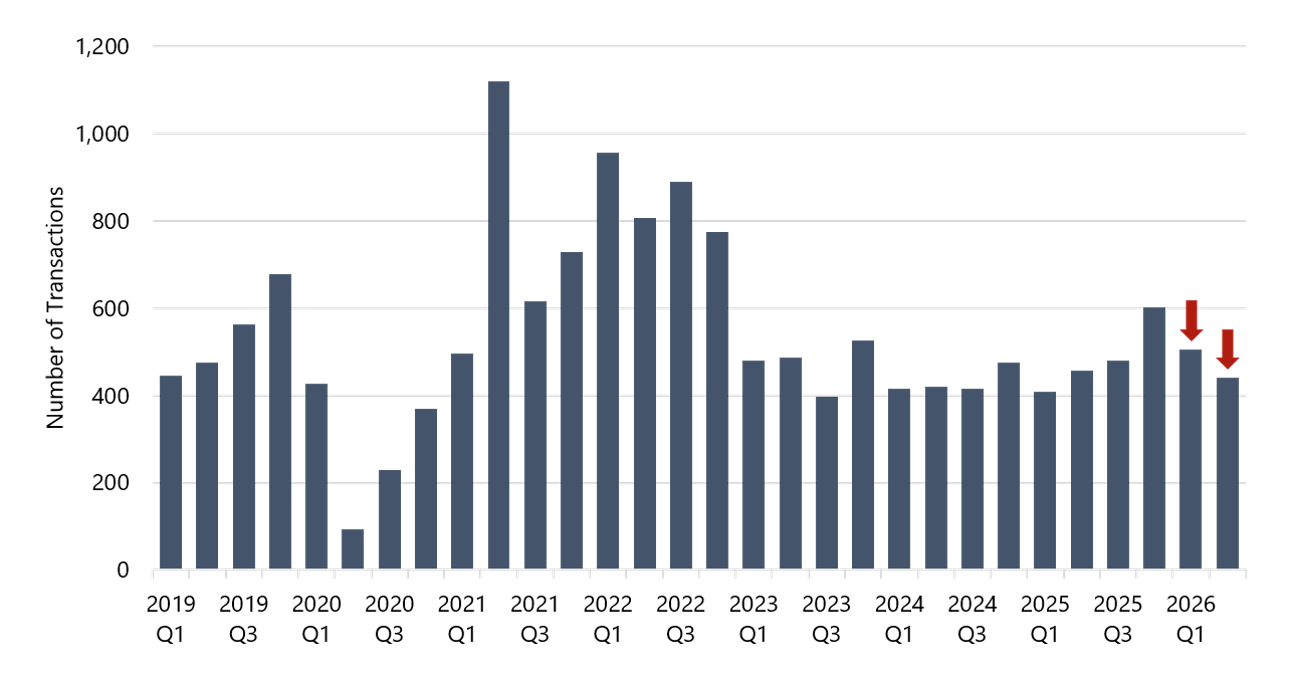
Despite a slower pace of transactions, capital remains active. Hotel sales volume by dollar value rose 9.1% in the second quarter compared with Q1 2026. The increase was driven primarily by higher asset values, as fewer hotels were traded during the period. Quarterly U.S. hotel transaction trends are shown below.
Source: MSCI Real Capital Analytics
Most hotel valuations continue to be underwritten using discount rates in the 10% to 11% range, with modest compression occurring for luxury assets and hotels in high-barrier-to-entry markets. That said, investors should remain disciplined when reviewing valuations that depend on unusually low discount rates or exit cap rates. For properties in low-barrier-to-entry markets, exit cap rates in the 6% to 7% range should prompt additional due diligence and review, as such assumptions may not fully reflect long-term market risk.
About HVS Leadership
At HVS Americas, our thought leadership is guided by the HVS Standards & Excellence Committee, which includes the following industry leaders:
- Rod Clough, MAI, CRE, MRICS, President of HVS Americas
- Anne R. Lloyd-Jones, MAI, CRE, Director of Consulting & Valuation Services, National Practice Leader
- Katy Black, MAI, Managing Director, Leader of the Mountain West Region and the HVS Americas Complex Consulting Group
- Tanya Pierson, MAI, ISHC, Senior Managing Director, HVS Minneapolis
- John Lancet, MAI, Senior Managing Director, Practice Leader of Southeast and Caribbean Regions
- Carrie Russell, AACI, MAI, RIBC, ISHC, Senior Managing Partner of HVS Canada
- Chelsey Leffet, Chief Operating Officer, U.S. Consulting & Valuation Division
- John Berean, Managing Director, HVS San Francisco and HVS Honolulu
- Ryan Mark, Senior Vice President, HVS Denver
- Marc Greeley, Senor Director, Leader of HVS Nashville Office
Behind HVS Americas is a 35-member senior leadership team of seasoned hospitality consultants with deep expertise across the industry. With professionals based in more than 40 cities from Buenos Aires to Montreal, we bring both local market knowledge and a comprehensive view of the Americas. As the year progresses, we are closely monitoring hotel trends and committed to helping our clients make informed, confident decisions.