Market Report

Creating the Next Chapter: Caribbean Hospitality Looks Beyond the Build at CHICOS 2026

November 20, 2026
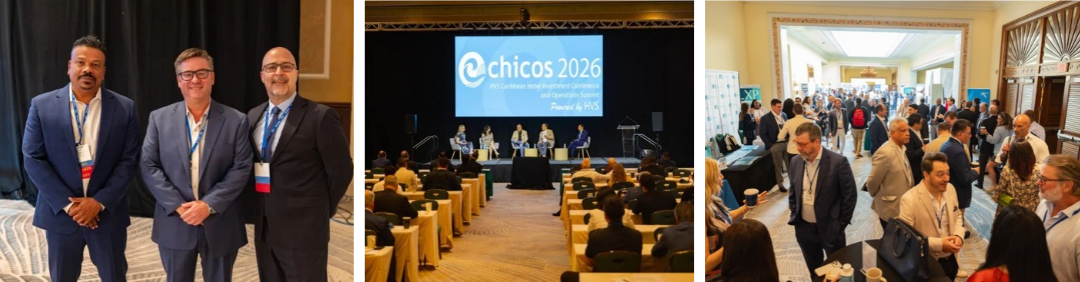
The 2026 edition of the Caribbean Hotel Investment Conference & Operations Summit (CHICOS) brought nearly 300 attendees to the Atlantis Paradise Island in the Bahamas for several days of networking and industry insights from key stakeholders in the region. This article provides the main takeaways from this year’s conference.
Last year’s CHICOS conference focused on the Caribbean region’s potential for continued growth and development in the region. This year’s CHICOS theme, “Beyond the Build – the Future of Caribbean Hospitality,” highlighted the opportunities, challenges, and innovations shaping the Caribbean’s next chapter. Our host partners, including the Bahamas Ministry of Tourism, the Bahamas Investment Authority, and Atlantis Paradise Island, were instrumental in the event’s success and hosted the lively opening reception that showcased Bahamian culture. This year also brought a significant influx of new faces, adding tremendous value to the networking experience for all delegates.
 
A few key takeaways from this year’s conference are presented below.

RevPAR Up Both Globally and in the Caribbean Region

Performance data was presented by CoStar and HVS. Led by ADR gains, global RevPAR has grown through September 2026, with 16 of the 18 major countries/regions realizing increases. The Caribbean has also achieved RevPAR growth thus far this year, bolstered by ADR rises and the highest occupancy level since 2016. Of note, 22 markets across the globe have posted luxury ADR of $1,000 or higher, including five Caribbean markets: Saint Barthelemy (topping the list at over $3,000), Anguilla, British Virgin Islands, Turks & Caicos Islands, and Antigua/Barbuda. Furthermore, all five Caribbean markets rank among the top eight worldwide for luxury ADR.

New Supply in the Caribbean 

The Caribbean hospitality market is undergoing a transformative period of growth, characterized by substantial new hotel development, expanding branded residential offerings, and continued investor interest. The development pipeline throughout the Caribbean region includes more than 200 hospitality projects that either have recently opened or are in some stage of development (under construction, in final planning, or announced).
 
Four markets are leading this cycle: The Bahamas, the Dominican Republic, Puerto Rico, and Barbados. The Dominican Republic is home to almost half of the projects in the Caribbean, concentrated in Punta Cana, the emerging Miches corridor, Pedernales, and Puerto Plata. Two of the luxury developments in The Bahamas—the Rosewood Exuma and Montage Cay—will be located on their own private islands. New branded residential and resort villa inventory is also prevalent, especially considering the large percentage of luxury properties under development, including the two aforementioned luxury Bahamas projects.
 
High-End Supply Growth in the Caribbean Remains Strong
Source: CoStar, HVS
 
CHICOS participants were optimistic about the new supply pipeline given that RevPAR growth continues, though the compounding of the additional inventory could slow ADR increases as the supply is absorbed. The pipeline also illustrates the overall positive long-term outlook for the market, with developers still bullish on the Caribbean region, especially in the luxury segment. The continued strong performance of luxury developments, including those that combine luxury hotels with branded residences, is proof of concept for the traditional luxury model and evidence of the continued demand for this product type.

The Future

Due to the resilient and overall steady demand growth in the Caribbean, especially in the luxury and upper-upscale segments, capital is available for projects. However, both the debt and equity participants at the conference noted that the typical green flags—e.g., a strong sponsor, an experienced development team, and a high-quality project—receive the most attention. Location is also key to closing the deal, as infrastructure and transportation can create undue risk; larger and luxury properties often mitigate this issue by building onsite infrastructure. Panelists further discussed current construction costs in the Caribbean, managing those costs, and mitigating risk.
 
Looking beyond the build, panelists discussed the future of the hospitality experience, including technology and AI usage, the future of marketing, and the balance between personalizing the guest experience and preserving guest privacy. Another significant component of the future-ready hotel is building strong regional workforces by partnering with local tourism boards. Panelists tackled the pros and cons of operating a property as all-inclusive versus other plans, including hybrids. All participants agreed that the conversion of an existing hotel to an all-inclusive property requires a significant capital outlay.
 
Attendees both on the development and operations sides expressed positive sentiments throughout the discussions, with only the typical headwinds (airlift, storms, and infrastructure) recognized as potential obstructions to ongoing regional growth. Embracing new technology, tailoring guest experiences for modern generations, and weaving conservation into typical operations all seem to be a matter of “when,” not “if.” 

Regional Leaders in Paradise

The Honorable Glenys Margaret Hanna-Martin, the Minister of Tourism for the Bahamas, led an impressive slate of government representation at the conference. A panel of leaders from the Cayman Islands Ministry of Tourism and Trade Development, U.S. Virgin Islands Department of Tourism, Bahamas Investment Authority, and Invest Turks and Caicos discussed the outlook for their islands and the Caribbean as a whole, highlighting continually improving infrastructure and transportation capacity, local engagement, and sustainability as keys to building on recent success. Leaders from Hilton, Marriott, Hyatt, IHG, Mandarin Oriental, and Wyndham agreed with those opinions in their discussion panels.

Final Takeaways 

The Caribbean’s future remains highly favorable, with RevPAR performance throughout the region driving new construction among all asset classes, though luxury developments are the most prevalent. Despite the uncertainty tied to global events and other challenges in the region, CHICOS participants described an optimistic outlook for the Caribbean in 2027.

About CHICOS 

CHICOS 2026 marked a banner year and celebrated 15 years of connections, collaboration, and Caribbean hospitality investment at Atlantis Paradise Island in The Bahamas. With over 300 attendees, 25 sponsors (including nine Platinum Sponsors), and packed conference sessions, the energy and enthusiasm throughout the event reflected a positive outlook for the region. Discussions highlighted the Caribbean's continued resilience, strong investment interest, evolving development opportunities, and growing demand for innovative hospitality experiences. Bringing together investors, developers, lenders, operators, and government leaders, CHICOS 2026 reinforced the event’s position as the premier platform for Caribbean hospitality investment and meaningful business connections. Adding to the excitement was the official announcement of the host destination for CHICOS 2027—the conference will be held in Grand Cayman for the first time November 10–12, 2027.
Market Report

Creating the Next Chapter: Caribbean Hospitality Looks Beyond the Build at CHICOS 2026

November 20, 2026
The 2026 edition of the Caribbean Hotel Investment Conference & Operations Summit (CHICOS) brought nearly 300 attendees to the Atlantis Paradise Island in the Bahamas for several days of networking and industry insights from key stakeholders in the region. This article provides the main takeaways from this year’s conference.
Last year’s CHICOS conference focused on the Caribbean region’s potential for continued growth and development in the region. This year’s CHICOS theme, “Beyond the Build – the Future of Caribbean Hospitality,” highlighted the opportunities, challenges, and innovations shaping the Caribbean’s next chapter. Our host partners, including the Bahamas Ministry of Tourism, the Bahamas Investment Authority, and Atlantis Paradise Island, were instrumental in the event’s success and hosted the lively opening reception that showcased Bahamian culture. This year also brought a significant influx of new faces, adding tremendous value to the networking experience for all delegates.
 
A few key takeaways from this year’s conference are presented below.

RevPAR Up Both Globally and in the Caribbean Region

Performance data was presented by CoStar and HVS. Led by ADR gains, global RevPAR has grown through September 2026, with 16 of the 18 major countries/regions realizing increases. The Caribbean has also achieved RevPAR growth thus far this year, bolstered by ADR rises and the highest occupancy level since 2016. Of note, 22 markets across the globe have posted luxury ADR of $1,000 or higher, including five Caribbean markets: Saint Barthelemy (topping the list at over $3,000), Anguilla, British Virgin Islands, Turks & Caicos Islands, and Antigua/Barbuda. Furthermore, all five Caribbean markets rank among the top eight worldwide for luxury ADR.

New Supply in the Caribbean 

The Caribbean hospitality market is undergoing a transformative period of growth, characterized by substantial new hotel development, expanding branded residential offerings, and continued investor interest. The development pipeline throughout the Caribbean region includes more than 200 hospitality projects that either have recently opened or are in some stage of development (under construction, in final planning, or announced).
 
Four markets are leading this cycle: The Bahamas, the Dominican Republic, Puerto Rico, and Barbados. The Dominican Republic is home to almost half of the projects in the Caribbean, concentrated in Punta Cana, the emerging Miches corridor, Pedernales, and Puerto Plata. Two of the luxury developments in The Bahamas—the Rosewood Exuma and Montage Cay—will be located on their own private islands. New branded residential and resort villa inventory is also prevalent, especially considering the large percentage of luxury properties under development, including the two aforementioned luxury Bahamas projects.
 
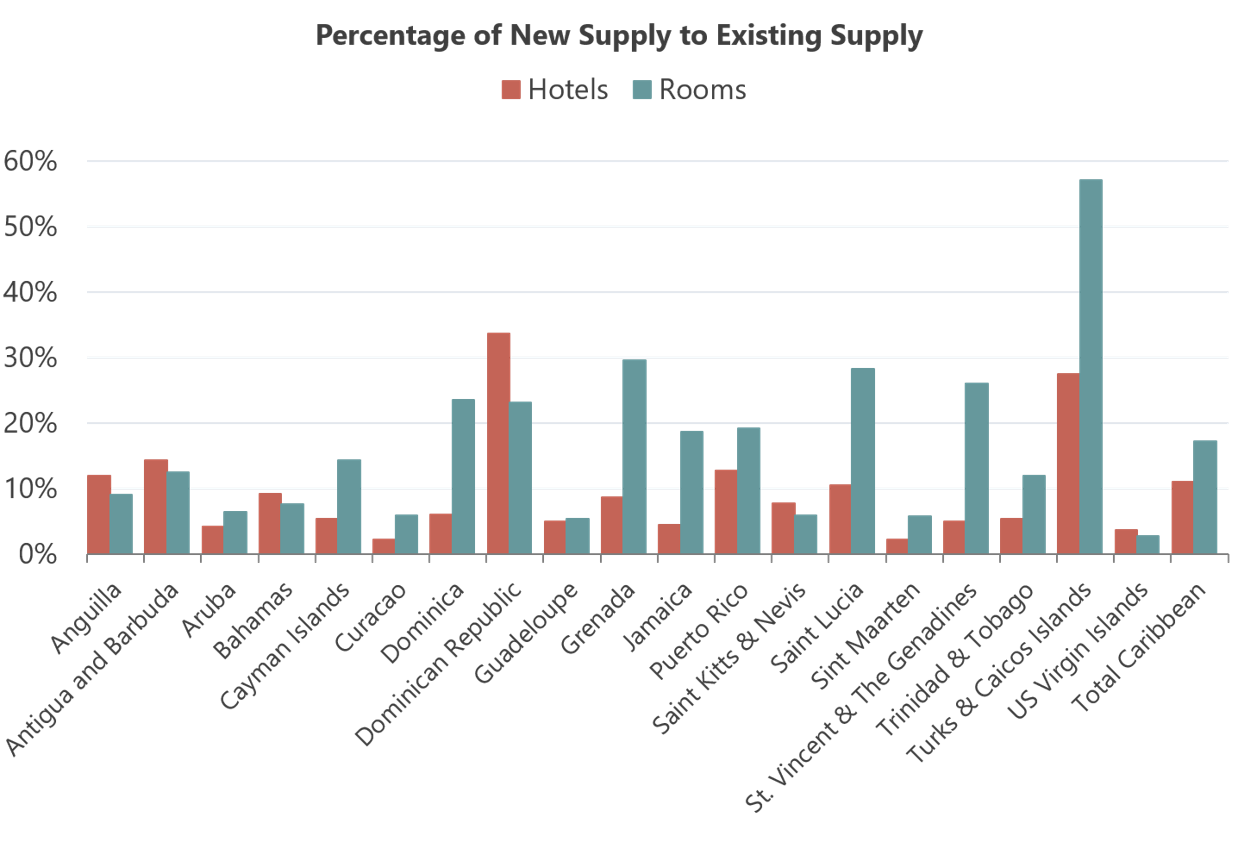
High-End Supply Growth in the Caribbean Remains Strong
Source: CoStar, HVS
 
CHICOS participants were optimistic about the new supply pipeline given that RevPAR growth continues, though the compounding of the additional inventory could slow ADR increases as the supply is absorbed. The pipeline also illustrates the overall positive long-term outlook for the market, with developers still bullish on the Caribbean region, especially in the luxury segment. The continued strong performance of luxury developments, including those that combine luxury hotels with branded residences, is proof of concept for the traditional luxury model and evidence of the continued demand for this product type.

The Future

Due to the resilient and overall steady demand growth in the Caribbean, especially in the luxury and upper-upscale segments, capital is available for projects. However, both the debt and equity participants at the conference noted that the typical green flags—e.g., a strong sponsor, an experienced development team, and a high-quality project—receive the most attention. Location is also key to closing the deal, as infrastructure and transportation can create undue risk; larger and luxury properties often mitigate this issue by building onsite infrastructure. Panelists further discussed current construction costs in the Caribbean, managing those costs, and mitigating risk.
 
Looking beyond the build, panelists discussed the future of the hospitality experience, including technology and AI usage, the future of marketing, and the balance between personalizing the guest experience and preserving guest privacy. Another significant component of the future-ready hotel is building strong regional workforces by partnering with local tourism boards. Panelists tackled the pros and cons of operating a property as all-inclusive versus other plans, including hybrids. All participants agreed that the conversion of an existing hotel to an all-inclusive property requires a significant capital outlay.
 
Attendees both on the development and operations sides expressed positive sentiments throughout the discussions, with only the typical headwinds (airlift, storms, and infrastructure) recognized as potential obstructions to ongoing regional growth. Embracing new technology, tailoring guest experiences for modern generations, and weaving conservation into typical operations all seem to be a matter of “when,” not “if.” 

Regional Leaders in Paradise

The Honorable Glenys Margaret Hanna-Martin, the Minister of Tourism for the Bahamas, led an impressive slate of government representation at the conference. A panel of leaders from the Cayman Islands Ministry of Tourism and Trade Development, U.S. Virgin Islands Department of Tourism, Bahamas Investment Authority, and Invest Turks and Caicos discussed the outlook for their islands and the Caribbean as a whole, highlighting continually improving infrastructure and transportation capacity, local engagement, and sustainability as keys to building on recent success. Leaders from Hilton, Marriott, Hyatt, IHG, Mandarin Oriental, and Wyndham agreed with those opinions in their discussion panels.

Final Takeaways 

The Caribbean’s future remains highly favorable, with RevPAR performance throughout the region driving new construction among all asset classes, though luxury developments are the most prevalent. Despite the uncertainty tied to global events and other challenges in the region, CHICOS participants described an optimistic outlook for the Caribbean in 2027.

About CHICOS 

CHICOS 2026 marked a banner year and celebrated 15 years of connections, collaboration, and Caribbean hospitality investment at Atlantis Paradise Island in The Bahamas. With over 300 attendees, 25 sponsors (including nine Platinum Sponsors), and packed conference sessions, the energy and enthusiasm throughout the event reflected a positive outlook for the region. Discussions highlighted the Caribbean's continued resilience, strong investment interest, evolving development opportunities, and growing demand for innovative hospitality experiences. Bringing together investors, developers, lenders, operators, and government leaders, CHICOS 2026 reinforced the event’s position as the premier platform for Caribbean hospitality investment and meaningful business connections. Adding to the excitement was the official announcement of the host destination for CHICOS 2027—the conference will be held in Grand Cayman for the first time November 10–12, 2027.