

Market Report

Beyond Revenue Growth: HVS Takeaways from The Lodging Conference

October 9, 2026
The tone of this year’s Lodging Conference was measured optimism, as strong 2026 RevPAR growth and limited new supply support the industry outlook. However, rising operating costs, expensive debt, loan maturities, and geopolitical risks continue to pressure profitability. Owners are increasingly focused on AI adoption, active asset management, brand economics, and converting revenue increases into asset value.
The JW Marriott Phoenix Desert Ridge Resort & Spa was the center of the country’s hospitality conversation this week, with 3,000 industry professionals gathering for the fall’s premier event in the desert. HVS had a large team present from our Consulting & Valuation, Brokerage & Advisory, Asset Management, Design, and Executive Search divisions, and Rod Clough, MAI, CRE, MRICS, kicked off Tuesday’s general session with our forecast and insights; see our latest forecast here.
In case you missed this event, below are the takeaways from a few of our attendees. Feel free to contact these authors for more insights.

Measured Optimism in a Period of Heightened RevPAR Growth and Real Risks
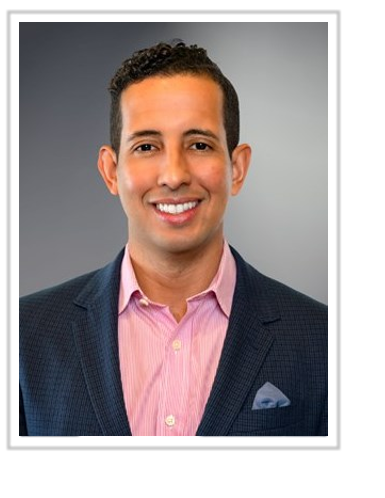

Luigi Major, MAI
, Managing Director - Advisory, HVS Consulting & Valuation


If last year's conference was defined by "challenges" and "uncertainty," this year's tone was noticeably more upbeat, even if many of the same themes carried over. Operationally, 2026 has been a stronger year, with RevPAR growth of roughly 5% expected by year-end and further increases anticipated in 2027. That said, expenses continue to rise and remain a hindrance to profitability. The transaction market has also improved, though momentum has more recently been tempered by rising Treasury yields, higher interest rates, and renewed inflation concerns. The bid-ask gap persists as well, with buyers and sellers still working to close the distance between pricing expectations and financing realities.

On the development side, new supply remains muted as construction costs stay elevated, which continues to support the performance of existing hotels. Meanwhile, geopolitical risk, from ongoing conflicts to inflation and the upcoming elections, remains a backdrop that the industry is watching closely.

Artificial intelligence was once again a central topic, but the conversation has shifted from potential to urgency. Speakers emphasized that owners, brands, and operators cannot afford to wait to integrate this technology, whether that means applying AI to forecasting and labor management or ensuring that hotels are properly represented as guests increasingly use AI tools to search and book. Another recurring theme was a renewed focus on owner and brand relationships and guest experience as the key differentiator, particularly in the luxury segment.

Overall, the mood was one of measured optimism: industry participants recognize that interest rates, costs, and global events remain real risks but see this as a time to capitalize on improving fundamentals and act with greater urgency heading into 2027.

AI, Rising Costs, and Current Cost of Debt Temper RevPAR Growth Excitement


Ryan Mark, Senior Vice President – Mountain West Region, HVS Consulting & Valuation


AI was a significant talking point at this year’s Lodging Conference, not only from an overall economic growth outlook, but also from the viewpoint of potential efficiencies that owners and operators can gain. Development is occurring with AI robotics to aid in back-of-the-house tasks such as laundry and vacuuming/carpet cleaning, while AI’s larger impact may be from reservation generation. This could be a potential benefit, driving guests to book directly with the hotel website rather than through online travel agency (OTA) platforms, limiting the costs associated with OTA commissions.

Limited new supply will help drive moderate occupancy increases over the next few years. The luxury segment still leads in performance strength and outlook, as decreases in discretionary spending throughout the U.S. are not expected to affect travelers within this segment as much. It is also worth noting that roughly 40% of all new supply in the pipeline at this time comprises extended-stay products.

Despite the overall RevPAR growth this year and positive topline revenues, higher operating and capital costs have eroded profitability for many hotel investments. Given the pressures on profitability, some of the “hottest” development areas are those that have favorable tax structures (e.g., Texas and Florida). Despite the profitability concerns, the overall outlook is still optimistic given the favorable RevPAR trend in 2026, which has been stronger than initial expectations, particularly in recent weeks.

Several participants noted concern about hotel loan maturities that will occur over the next year. Many of these loans originated at significantly lower interest rates, and owners may be forced to sell, as their revenues may not meet current debt-service requirements.

Owners Still Find Rising Costs a Challenge Despite RevPAR Growth


Marcus Lee, Executive Vice President – Development, HVS Asset Management & Advisory


While RevPAR growth has been strong in 2026, that is not necessarily translating to profitability for every hotel. RevPAR has been rising for most full-service/upper-upscale and luxury hotels, an indication of the spending power and financial health of middle- and higher-income consumers. However, CoStar’s data through July 2026 show that GOP margins have remained flat year-over-year despite RevPAR growth of 5%, mainly due to a rise in undistributed expenses (administrative and general, technology, and utilities) at the property level. As operating costs remain elevated, greater understanding about where profitability is being gained or lost will be critical. Active asset management or a hotel performance analysis can help maximize the impact of revenue growth by benchmarking operating performance, identifying expense and margin opportunities, and ensuring that incremental revenues flow to the GOP and ultimately asset value.

Moreover, owners are increasingly questioning whether franchise fees, brand standards, brand-mandated technology, and renovation requirements/PIPs actually generate incremental revenue or profitability. Brands are listening to their owners and responding with greater flexibility, such as longer renovation cycles tied to strong guest satisfaction scores, new conversion-friendly brands, simpler fee structures, and greater emphasis on generating ancillary revenue. For example, if a hotel has strong guest satisfaction scores, a market-competitive property and guestroom condition, and a strong RevPAR index outperforming its competitive set, should an owner necessarily deploy capital because a prescribed renovation cycle has arrived? The answer should depend on the expected ROI of the renovation rather than arbitrary compliance requirements.
 
For owners evaluating a new development, conversion, or repositioning, the focus should extend beyond brand contribution to topline revenue and into the underlying economics of the partnership. An independent brand/operator selection process can help owners evaluate competing affiliations based on total costs, operating requirements, revenue potential, and expected returns, while more robust hotel-management agreement negotiations can better align long-term ownership interests with the brand or operator.
 
With expertise spanning consulting and valuation, brokerage, asset management, executive search, and more, HVS offers guidance to lodging industry stakeholders throughout every stage of the investment life cycle. Whether you are evaluating performance, navigating financing or brand decisions, planning a development or repositioning, or seeking long-term value-creation opportunities, HVS can provide data-driven solutions tailored to your goals. Contact our team to discuss how we can support your next decision.
Market Report

Beyond Revenue Growth: HVS Takeaways from The Lodging Conference

October 9, 2026
The tone of this year’s Lodging Conference was measured optimism, as strong 2026 RevPAR growth and limited new supply support the industry outlook. However, rising operating costs, expensive debt, loan maturities, and geopolitical risks continue to pressure profitability. Owners are increasingly focused on AI adoption, active asset management, brand economics, and converting revenue increases into asset value.
The JW Marriott Phoenix Desert Ridge Resort & Spa was the center of the country’s hospitality conversation this week, with 3,000 industry professionals gathering for the fall’s premier event in the desert. HVS had a large team present from our Consulting & Valuation, Brokerage & Advisory, Asset Management, Design, and Executive Search divisions, and Rod Clough, MAI, CRE, MRICS, kicked off Tuesday’s general session with our forecast and insights; see our latest forecast here.
In case you missed this event, below are the takeaways from a few of our attendees. Feel free to contact these authors for more insights.

Measured Optimism in a Period of Heightened RevPAR Growth and Real Risks


Luigi Major, MAI
, Managing Director - Advisory, HVS Consulting & Valuation


If last year's conference was defined by "challenges" and "uncertainty," this year's tone was noticeably more upbeat, even if many of the same themes carried over. Operationally, 2026 has been a stronger year, with RevPAR growth of roughly 5% expected by year-end and further increases anticipated in 2027. That said, expenses continue to rise and remain a hindrance to profitability. The transaction market has also improved, though momentum has more recently been tempered by rising Treasury yields, higher interest rates, and renewed inflation concerns. The bid-ask gap persists as well, with buyers and sellers still working to close the distance between pricing expectations and financing realities.

On the development side, new supply remains muted as construction costs stay elevated, which continues to support the performance of existing hotels. Meanwhile, geopolitical risk, from ongoing conflicts to inflation and the upcoming elections, remains a backdrop that the industry is watching closely.

Artificial intelligence was once again a central topic, but the conversation has shifted from potential to urgency. Speakers emphasized that owners, brands, and operators cannot afford to wait to integrate this technology, whether that means applying AI to forecasting and labor management or ensuring that hotels are properly represented as guests increasingly use AI tools to search and book. Another recurring theme was a renewed focus on owner and brand relationships and guest experience as the key differentiator, particularly in the luxury segment.

Overall, the mood was one of measured optimism: industry participants recognize that interest rates, costs, and global events remain real risks but see this as a time to capitalize on improving fundamentals and act with greater urgency heading into 2027.

AI, Rising Costs, and Current Cost of Debt Temper RevPAR Growth Excitement


Ryan Mark, Senior Vice President – Mountain West Region, HVS Consulting & Valuation


AI was a significant talking point at this year’s Lodging Conference, not only from an overall economic growth outlook, but also from the viewpoint of potential efficiencies that owners and operators can gain. Development is occurring with AI robotics to aid in back-of-the-house tasks such as laundry and vacuuming/carpet cleaning, while AI’s larger impact may be from reservation generation. This could be a potential benefit, driving guests to book directly with the hotel website rather than through online travel agency (OTA) platforms, limiting the costs associated with OTA commissions.

Limited new supply will help drive moderate occupancy increases over the next few years. The luxury segment still leads in performance strength and outlook, as decreases in discretionary spending throughout the U.S. are not expected to affect travelers within this segment as much. It is also worth noting that roughly 40% of all new supply in the pipeline at this time comprises extended-stay products.

Despite the overall RevPAR growth this year and positive topline revenues, higher operating and capital costs have eroded profitability for many hotel investments. Given the pressures on profitability, some of the “hottest” development areas are those that have favorable tax structures (e.g., Texas and Florida). Despite the profitability concerns, the overall outlook is still optimistic given the favorable RevPAR trend in 2026, which has been stronger than initial expectations, particularly in recent weeks.

Several participants noted concern about hotel loan maturities that will occur over the next year. Many of these loans originated at significantly lower interest rates, and owners may be forced to sell, as their revenues may not meet current debt-service requirements.

Owners Still Find Rising Costs a Challenge Despite RevPAR Growth


Marcus Lee, Executive Vice President – Development, HVS Asset Management & Advisory


While RevPAR growth has been strong in 2026, that is not necessarily translating to profitability for every hotel. RevPAR has been rising for most full-service/upper-upscale and luxury hotels, an indication of the spending power and financial health of middle- and higher-income consumers. However, CoStar’s data through July 2026 show that GOP margins have remained flat year-over-year despite RevPAR growth of 5%, mainly due to a rise in undistributed expenses (administrative and general, technology, and utilities) at the property level. As operating costs remain elevated, greater understanding about where profitability is being gained or lost will be critical. Active asset management or a hotel performance analysis can help maximize the impact of revenue growth by benchmarking operating performance, identifying expense and margin opportunities, and ensuring that incremental revenues flow to the GOP and ultimately asset value.

Moreover, owners are increasingly questioning whether franchise fees, brand standards, brand-mandated technology, and renovation requirements/PIPs actually generate incremental revenue or profitability. Brands are listening to their owners and responding with greater flexibility, such as longer renovation cycles tied to strong guest satisfaction scores, new conversion-friendly brands, simpler fee structures, and greater emphasis on generating ancillary revenue. For example, if a hotel has strong guest satisfaction scores, a market-competitive property and guestroom condition, and a strong RevPAR index outperforming its competitive set, should an owner necessarily deploy capital because a prescribed renovation cycle has arrived? The answer should depend on the expected ROI of the renovation rather than arbitrary compliance requirements.
 
For owners evaluating a new development, conversion, or repositioning, the focus should extend beyond brand contribution to topline revenue and into the underlying economics of the partnership. An independent brand/operator selection process can help owners evaluate competing affiliations based on total costs, operating requirements, revenue potential, and expected returns, while more robust hotel-management agreement negotiations can better align long-term ownership interests with the brand or operator.
 
With expertise spanning consulting and valuation, brokerage, asset management, executive search, and more, HVS offers guidance to lodging industry stakeholders throughout every stage of the investment life cycle. Whether you are evaluating performance, navigating financing or brand decisions, planning a development or repositioning, or seeking long-term value-creation opportunities, HVS can provide data-driven solutions tailored to your goals. Contact our team to discuss how we can support your next decision.