
Market Report

Suburban Resorts in China

October 11, 2010
Since around 2005 an increasing number of internationally branded resorts have opened in China. This article investigates their working model, demand profiles, key facilities and market outlook.

A new type of hotel category has emerged in China over the recent past. An increasing number of upmarket, internationally branded hotel supply can be found outside major cities. The suburban getaway is increasingly popular with affluent city dwellers who are looking for an escape from the busy streets they call home. The push by the government to improve highway infrastructure concurrent with increasing car ownership ratios opened a new market first that has gained momentum since 2005/06. The following graph shows the increase in private passenger vehicle ownership since 1990 according to the National Bureau of Statistics of China.
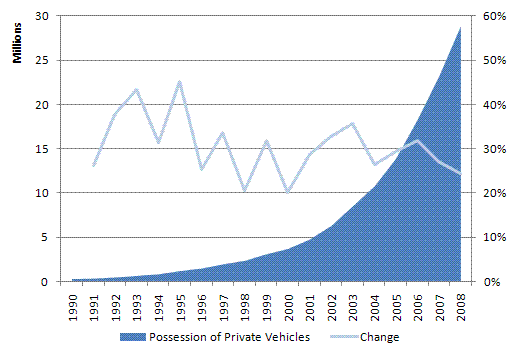
Private Vehicle Ownership 1990-2008

This increase in essentially car ownership is comparable with a trend observed in Germany starting in the 1950s, when droves of families benefitting from the ‘Wirtschaftswunder’ vacationed in northern Italy by means of their Volkswagen. The USA experienced a similar phenomenon earlier on with the emergence of places like Palm Springs, California as a getaway for the rich and famous in the 1930s and 1940s, who were taking advantage of their superior mobility. The increase in mobility in China today also has a meaningful impact on hotel development, including suburban resorts.

Key cities such as Shanghai, Beijing, Shenzhen, Guangzhou, Hangzhou and Tianjin all have a population where a critical mass of highly affluent individuals and successful companies exists, generating demand for suburban resorts. Further opportunities exist in Wuhan, Chengdu, Chongqing and other major cities.

As a result, these areas witness an increasing number of hotels opening. Areas that spearheaded this trend are home to certain demand generators, such as golf courses and government-assigned tourism districts, and often feature upscale residential developments. Good accessibility via (new built) highways is a key catalyst for identifying suitable locations proximate to major urban areas. Natural features such as lakes, rivers, mountains and forests further enhance the appeal of a site.

The number of internationally branded properties in suburban locations and proximate to metropolitan areas has increased over the years as indicated in the following table.

Selection of Internationally Branded Suburban Resorts

PropertyNumber of RoomsOpening Year
Sofitel Dongguan Royal Lagoon 2682002
Sofitel Dongguan Golf Resort1332005
Sofitel Zhongshan Golf Resort Nanjing1302006
Sofitel Hangzhou Xanadu Resort3012006
Crowne Plaza Lake Malaren Shanghai2742007
Sheraton Dameisha Resort, Shenzhen3862007
Le Méridien She Shan Shanghai3272007
Doubletree by Hilton Resort Wuxi Lingshan Hotel4872009
Sofitel Shanghai Sheshan Oriental3682009
InterContinental Huizhou Resort2202009
Hilton Chongqing Nanshan Resort and Spa1862010
Sheraton Qingyuan Lion Lake Resort3512012

What are the characteristics of demand here? The two most prominent segments are from the MICE (Meetings, Incentives, Conventions and Exhibitions) and Leisure markets. The MICE segment is largely driven by multinational corporations (MNCs) and local and national governments. Incentive groups from domestic companies constitute another source of demand here. Meeting facilities are important and group size can vary from small executive meetings to larger gatherings that require a ballroom and breakout rooms. The average length of stay (ALOS) varies from one to four nights. Important amenities to cater to this segment include a spa, sauna and KTV. As of now, this segment is male dominated. Weddings also fall into this category; while they generate demand for ballroom and meeting facilities accessibility permitting, room night demand is limited.

The Leisure segment is made up of couples, families and small groups of friends who are looking for a weekend getaway. There is some potential for group business; however, packages are most popular, including spa treatments. Leisure facilities such as a pool or artificial beach are attractions that cater to this segment. ALOS is typically two nights or less.

Seasonality of demand generally opposes trends observed in city hotels. October to January and sometimes into the first week of February is generally the high season, especially driven by weekday MICE demand. The summer holiday season and Golden Week are periods of high demand from the Leisure segment. Weekend demand here can be high all year round, weather permitting.

As mentioned, key facilities include a ballroom and meeting rooms. Leisure facilities such as a pool are popular among leisure travellers. Spa treatment rooms are both used by MICE guests and ladies on leisure trips. Men appreciate steam bath and sauna facilities. Mahjong and billiard rooms cater to families. Nightclubs are important for incentive groups and some MICE demand. In terms of food and beverage outlets, a Chinese restaurant with private dining rooms, a western restaurant with buffet and a specialty restaurant are common. In terms of rooms, king-size beds are more popular and, if available, views of the natural scenery can allow for premium pricing. A quality golf course nearby will complement the range of activities offered to both leisure and MICE guests.

Outlook
The trend of internationally branded suburban resorts is expected to continue into the foreseeable future. Increasingly affluent and mobile city dwellers are seeking out destinations and honour premium-priced hotel products. Supply growth is expected to remain moderate while an increasing number of cities will become attractive for development. Performance of suburban resorts is not expected to flourish in the short-term, as MICE demand from MNCs remains lacklustre. A key factor common to all suburban resorts will be an international brand affiliation that stands for good service, high-quality product and has a good reputation nationwide.

Market Report

Suburban Resorts in China

October 11, 2010
Since around 2005 an increasing number of internationally branded resorts have opened in China. This article investigates their working model, demand profiles, key facilities and market outlook.

A new type of hotel category has emerged in China over the recent past. An increasing number of upmarket, internationally branded hotel supply can be found outside major cities. The suburban getaway is increasingly popular with affluent city dwellers who are looking for an escape from the busy streets they call home. The push by the government to improve highway infrastructure concurrent with increasing car ownership ratios opened a new market first that has gained momentum since 2005/06. The following graph shows the increase in private passenger vehicle ownership since 1990 according to the National Bureau of Statistics of China.

Private Vehicle Ownership 1990-2008

This increase in essentially car ownership is comparable with a trend observed in Germany starting in the 1950s, when droves of families benefitting from the ‘Wirtschaftswunder’ vacationed in northern Italy by means of their Volkswagen. The USA experienced a similar phenomenon earlier on with the emergence of places like Palm Springs, California as a getaway for the rich and famous in the 1930s and 1940s, who were taking advantage of their superior mobility. The increase in mobility in China today also has a meaningful impact on hotel development, including suburban resorts.

Key cities such as Shanghai, Beijing, Shenzhen, Guangzhou, Hangzhou and Tianjin all have a population where a critical mass of highly affluent individuals and successful companies exists, generating demand for suburban resorts. Further opportunities exist in Wuhan, Chengdu, Chongqing and other major cities.

As a result, these areas witness an increasing number of hotels opening. Areas that spearheaded this trend are home to certain demand generators, such as golf courses and government-assigned tourism districts, and often feature upscale residential developments. Good accessibility via (new built) highways is a key catalyst for identifying suitable locations proximate to major urban areas. Natural features such as lakes, rivers, mountains and forests further enhance the appeal of a site.

The number of internationally branded properties in suburban locations and proximate to metropolitan areas has increased over the years as indicated in the following table.

Selection of Internationally Branded Suburban Resorts

PropertyNumber of RoomsOpening Year
Sofitel Dongguan Royal Lagoon 2682002
Sofitel Dongguan Golf Resort1332005
Sofitel Zhongshan Golf Resort Nanjing1302006
Sofitel Hangzhou Xanadu Resort3012006
Crowne Plaza Lake Malaren Shanghai2742007
Sheraton Dameisha Resort, Shenzhen3862007
Le Méridien She Shan Shanghai3272007
Doubletree by Hilton Resort Wuxi Lingshan Hotel4872009
Sofitel Shanghai Sheshan Oriental3682009
InterContinental Huizhou Resort2202009
Hilton Chongqing Nanshan Resort and Spa1862010
Sheraton Qingyuan Lion Lake Resort3512012

What are the characteristics of demand here? The two most prominent segments are from the MICE (Meetings, Incentives, Conventions and Exhibitions) and Leisure markets. The MICE segment is largely driven by multinational corporations (MNCs) and local and national governments. Incentive groups from domestic companies constitute another source of demand here. Meeting facilities are important and group size can vary from small executive meetings to larger gatherings that require a ballroom and breakout rooms. The average length of stay (ALOS) varies from one to four nights. Important amenities to cater to this segment include a spa, sauna and KTV. As of now, this segment is male dominated. Weddings also fall into this category; while they generate demand for ballroom and meeting facilities accessibility permitting, room night demand is limited.

The Leisure segment is made up of couples, families and small groups of friends who are looking for a weekend getaway. There is some potential for group business; however, packages are most popular, including spa treatments. Leisure facilities such as a pool or artificial beach are attractions that cater to this segment. ALOS is typically two nights or less.

Seasonality of demand generally opposes trends observed in city hotels. October to January and sometimes into the first week of February is generally the high season, especially driven by weekday MICE demand. The summer holiday season and Golden Week are periods of high demand from the Leisure segment. Weekend demand here can be high all year round, weather permitting.

As mentioned, key facilities include a ballroom and meeting rooms. Leisure facilities such as a pool are popular among leisure travellers. Spa treatment rooms are both used by MICE guests and ladies on leisure trips. Men appreciate steam bath and sauna facilities. Mahjong and billiard rooms cater to families. Nightclubs are important for incentive groups and some MICE demand. In terms of food and beverage outlets, a Chinese restaurant with private dining rooms, a western restaurant with buffet and a specialty restaurant are common. In terms of rooms, king-size beds are more popular and, if available, views of the natural scenery can allow for premium pricing. A quality golf course nearby will complement the range of activities offered to both leisure and MICE guests.

Outlook
The trend of internationally branded suburban resorts is expected to continue into the foreseeable future. Increasingly affluent and mobile city dwellers are seeking out destinations and honour premium-priced hotel products. Supply growth is expected to remain moderate while an increasing number of cities will become attractive for development. Performance of suburban resorts is not expected to flourish in the short-term, as MICE demand from MNCs remains lacklustre. A key factor common to all suburban resorts will be an international brand affiliation that stands for good service, high-quality product and has a good reputation nationwide.