
A Historic City with Modern Momentum
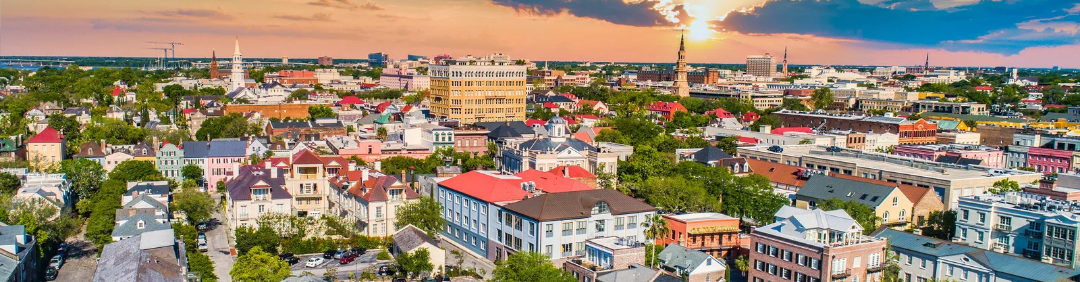
Charleston, known as the “Holy City” because of the prominence of churches, is the most populous city in South Carolina. It is a notable tourist destination, featuring streets lined with grand live oak trees draped with Spanish moss, historic forts and plantations, old antebellum homes, antique shops, and museums, as well as proximity to beaches. In 2016, Charleston became the first domestic destination to earn the coveted “Number 1 City in the World” designation from Travel + Leisure. More recently, Charleston was ranked the number-one city in the United States in Travel + Leisure’s World’s Best Awards each year from 2012 through 2024, then ranked #3 in 2025 and #2 in 2026.The greater Charleston market encompasses nearly 20,000 hotel rooms, one-third of which are located on the Charleston Peninsula. In addition to tourism, the city’s hotel demand is largely supported by a renowned healthcare sector and growing industrial and business sectors. In the years following the pandemic, the greater market recorded strong growth, surpassing all previous years’ metrics by 2022. Despite the addition of multiple hotels since 2020, the market has experienced year-over-year increases in demand and ADR.
Significant hotel openings on the Peninsula in 2025 and 2026 have included The Charlee on Cannon, The Cooper, and The Nickel Hotel. Market growth has been well supported by increases in tourism visitation along with multiple city-wide developments. Key developments include the $1-billion Boeing expansion, Medical University of South Carolina’s planned 62-acre Medical District, and a new $1.2-billion Roper St. Francis campus.
Visitor Demand That Keeps Building
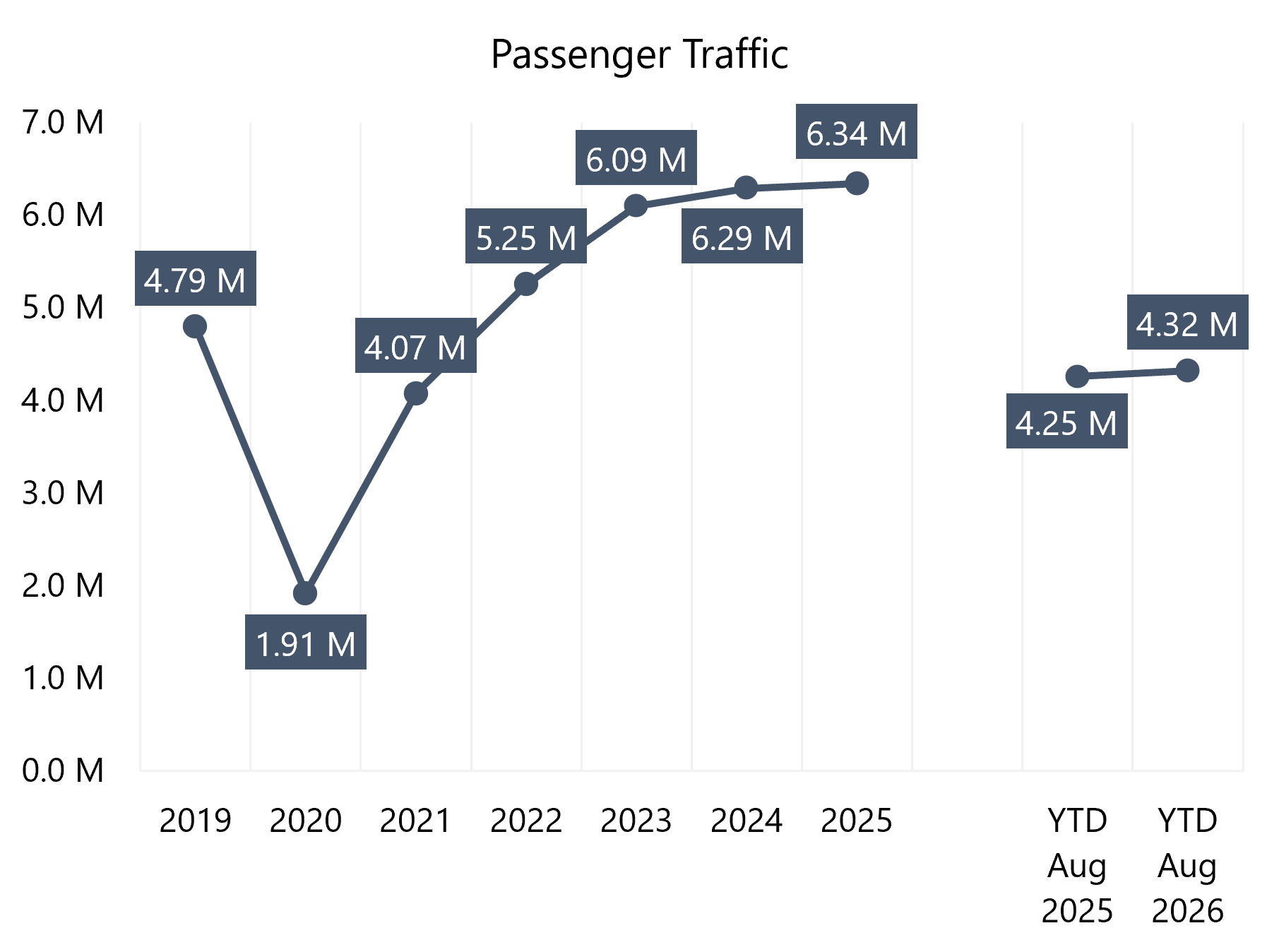
Charleston’s tourism appeal is supported by a broad mix of cultural, historic, and leisure attractions that draw visitors throughout the year. Popular destinations such as Charleston City Market, Rainbow Row, the South Carolina Aquarium, and the Old Slave Mart Museum contribute to steady leisure demand, while signature events including the Charleston Wine + Food Festival, the Southeastern Wildlife Exposition, and Spoleto Festival help generate additional visitation during key periods.After 20 years of planning, the International African American Museum opened along the Cooper River in Downtown Charleston in June 2023. The museum is one of the numerous venues throughout the greater Charleston area that seek to inspire and educate visitors about the city's unique role in American history. According to the Charleston Area Convention and Visitors Bureau, the economic impact of tourism on the greater Charleston area in 2025 was $14.35 billion, with a record 4.84 million hotel room nights sold in the county. Moreover, airport statistics from the Charleston International Airport (CHS) illustrate record-high passenger traffic levels in recent years, with continued growth in the year-to-date period.
Aerospace Investment Taking Flight
In 2021, Charleston became the sole production location for Boeing’s 787 Dreamliner, consolidating the program’s full production cycle in South Carolina. The decision has positioned the Lowcountry as a critical hub for one of Boeing’s largest commercial aircraft programs, and that role is now expanding.In November 2025, Boeing broke ground on a more than $1-billion expansion of its Charleston operations, including a new 1.2-million-square-foot final-assembly building, parts-preparation and vertical-fin paint facilities, additional flight-line capacity, and expanded space for 787 interior components. When complete in 2028, the investment is expected to support more than 1,000 new jobs and accommodate higher 787 production rates as demand grows. With the new final-assembly facility designed to significantly increase production capacity, Boeing’s investment also provides a longer-term anchor for economic activity in Greater Charleston and strengthens the Lowcountry’s connection to a globally integrated aerospace supply chain.
For Greater Charleston’s hospitality industry, the expansion is expected to generate additional demand from Boeing’s international clients, airline representatives, suppliers, engineers, and other business visitors to the region. Increased site inspections, supplier coordination, training, and production-related travel will also create greater demand for hotel room nights.
Medical Growth Strengthening the Market
The healthcare sector is a pivotal part of the Charleston hotel demand base, including entities such as The Medical University of South Carolina (MUSC), Roper St. Francis Healthcare, Ralph H. Johnson VA Health Care System, and Trident Health System. Additional growth is underway in this sector that should bolster hotel demand going forward.In 2025, the City of Charleston advanced the review for MUSC’s planned 62-acre Medical District Overlay Zone to support campus growth and a new $1.1-billion cancer hospital. If approved, the development would include a state-of-the-art cancer center, expanded housing, and additional developments in an innovation district. Moreover, in 2025, construction began on a $1.2-billion Roper St. Francis campus to replace the Downtown Charleston Roper Hospital. The nearly 27-acre campus is expected to include a nine-story tower over a two-level podium, housing 328 inpatient beds, a 47-bay emergency department, 44 critical care beds, 18 operating rooms, and a helipad. Completion is slated for mid-year 2029.
Hotel Supply Rising with Demand
Multiple new hotel developments are underway or planned for the greater Charleston market, indicative of the growing economy and strengthening demand drivers. Comprising a mix of full-service, select-service, limited-service, extended-stay, and upscale boutique properties, the new supply in Charleston is expected to be absorbed steadily as it opens over the next several years.Planned New Supply Pipeline for Charleston as of Late 2026
Source: HVS, CoStar
Positive Fundamentals Looking Ahead
The projects detailed above are expected to meaningfully boost the hospitality sector given the strength and stability of the region’s tourism and aviation industries and the healthcare sector. Furthermore, the long-term growth of hospitality trends for the city should be supported by planned projects such as the Charleston International Airport expansion, the new College of Charleston School of Business facility, and the Magnolia Landing mixed-use district.Charleston’s hospitality fundamentals remain sound, with demand levels, ADR, and RevPAR increasing in the past few years, despite multiple supply additions. Furthermore, demand growth has continued to outpace supply growth. The ongoing and anticipated developments in the market bode well for area hotels. Despite the continued addition of hotel rooms, ADR and RevPAR are expected to continue their upward trends.
At HVS, data is only the starting point. Our local market presence enables firsthand engagement with key industry players, providing real‑time insight and current data specific to each market. The result is analysis grounded in today’s realities, not outdated assumptions. For more information on the Charleston market or guidance on investment decisions aligned with your strategy and risk tolerance, contact Kaitlyn Hennessy, your local HVS Southeast hospitality expert.