

The American Resort Development Association (ARDA) plays a central role in shaping the timeshare industry and advocating for resort owners. At the 2026 ARDA Spring Conference last month, industry leaders gathered in Las Vegas to discuss key trends, policy priorities, and the evolving landscape of vacation ownership.
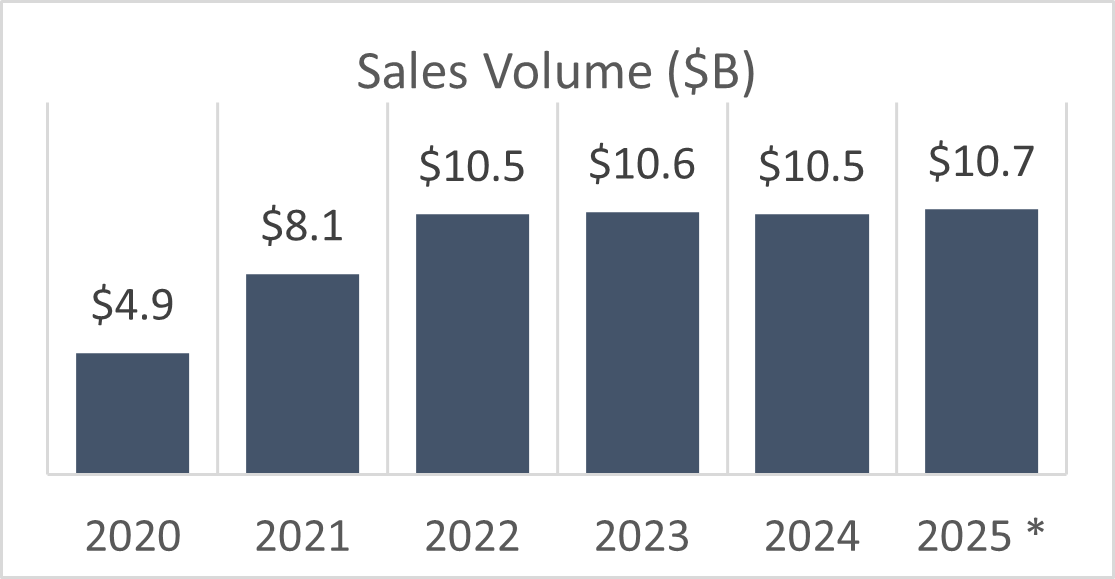
The timeshare industry generates approximately $10.7 billion in sales annually, with nearly ten million U.S. households owning at least one timeshare product, according to ARDA’s 2025 State of the Vacation Timeshare Industry report. The industry has a solid foundation, with approximately 1,434 resorts and 188,700 total units nationwide in 2025.
Sales Volume Stabilizes at Peak Levels Following Strong Post-2020 Rebound
* 2025 data is preliminary
Source: 2025 State of the Vacation Timeshare Industry
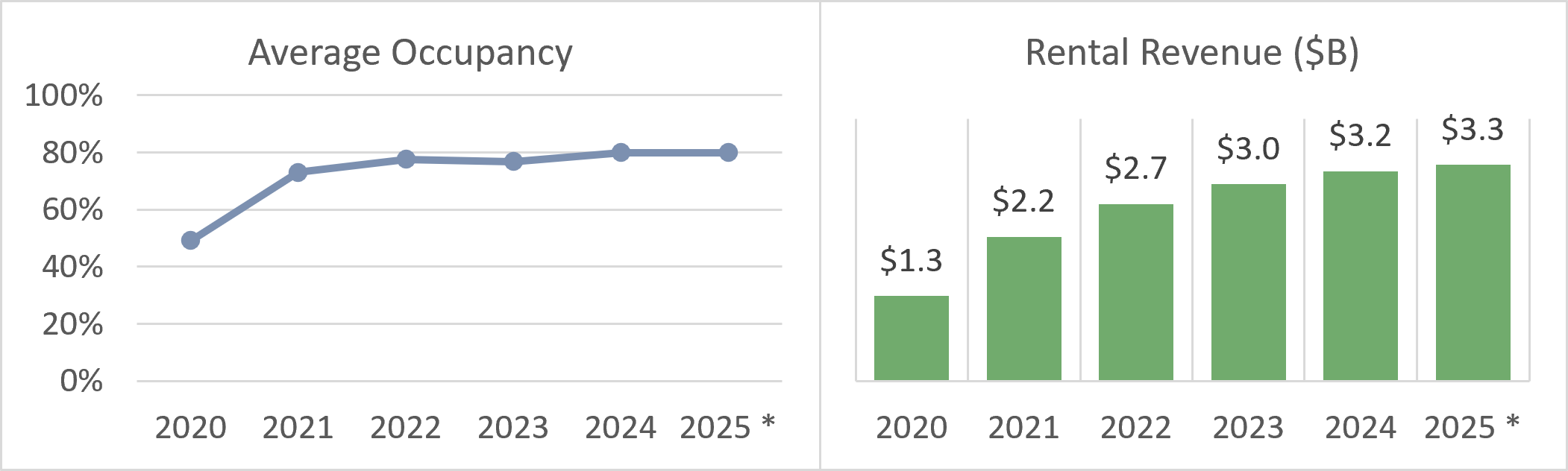
According to ARDA’s 2025 State of the Vacation Timeshare Industry report, the timeshare industry demonstrates strong and stable performance, often outpacing the traditional hotel sector in key metrics. One of the most significant differences is occupancy rates. Timeshare resorts average 80.0% occupancy, as compared to the 62.3% national average hotel occupancy rate in 2025. This disparity is largely attributed to the prepaid nature of vacation ownership, which ensures guaranteed bookings.
Stable Occupancy Paired with Continued Revenue Growth Signals Pricing Strength
* 2025 data is preliminary
Source: 2025 State of the Vacation Timeshare Industry
Over the years, the timeshare industry has shifted from selling weeks and points to implementing “right-of-use” club and membership programs with shorter-term products and greater flexibility on exit. All-inclusive resorts are a growing trend in the U.S. market, offering lifestyle products, more food & beverage choices, and additional guest experiences. Virtual 3D presentations, enhanced by AI technology, continue to adapt to buyer preferences, giving operators a new tool for selling timeshare products more intelligently.
All the major brands are embracing AI from a marketing perspective, while a few operators are more cautious, first leaning into improving internal productivity. Westgate Resorts remarked that AI technology helps highlight weaknesses within your organization and identifies pivot opportunities to improve overall operations, observing that a “buy-in” from all integrated departments is necessary for success in any AI implementation.
In recent years, the industry has undergone considerable consolidation, as smaller, independent timeshare companies have been absorbed by larger, branded, hospitality-driven timeshare companies. Some of these mergers have begun to blur the lines between active-sales resorts and those that are not in active sales. Examples of these recent acquisitions are listed below.
- Hilton Grand Vacations acquired Bluegreen Vacations in January 2024 and Diamond Resorts International in August 2021
- Marriott Vacations Worldwide acquired Welk Resorts in January 2021
- Travel + Leisure Co. acquired Accor Vacation Club in March 2024
- Holiday Inn Club Vacations acquired Royal Resorts in May 2023
The primary risk of the consolidation of the industry is the potential for less differentiated resort systems. However, the larger, hospitality-driven timeshare companies benefit from nationally recognized and trusted names, which enhances the reputation of the entire industry.
The industry is currently experiencing an accelerated phase of winding down older and dysfunctional timeshare resorts, which has caused the overall resort and unit counts to decrease by about 5% since 2020. This may ultimately improve the health of the timeshare ecosystem.
As the timeshare industry continues to evolve, having the right advisory partner is critical. For tailored consulting solutions, reach out to Donald Stephens Jr. and the HVS Shared Ownership Services team. We can help you navigate industry changes and maximize value in your timeshare portfolio.