
Market Report

The Growth and Reinvention of Jersey City in Northern New Jersey

May 20, 2026
Jersey City has undergone a significant transformation over the past decade, driven by extensive commercial and residential development efforts. Strong connectivity to Manhattan, combined with expansive Hudson River waterfront areas, has enhanced the city’s appeal to residents and businesses seeking accessibility to New York City with relatively lower costs.
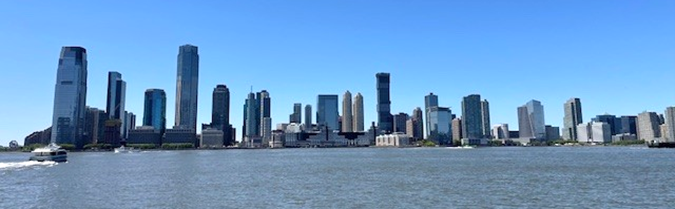
The Jersey City skyline has blossomed into a panorama of skyscrapers during the last decade. Historically an industrial and railroad powerhouse, Jersey City has become a key cultural, financial, technological, and transportation hub. The continued growth, combined with the limited developable waterfront areas, has helped spur development projects in the more inland sections of Jersey City, such as Journal Square. Additionally, travel between Manhattan and New Jersey is efficient and easy with transportation options such as the Port Authority Trans-Hudson (PATH) rapid transit system and the Holland Tunnel.

Hotel Market Overview and Performance 

Jersey City’s hotel inventory currently comprises 2,472 guestrooms, with 785 keys added between 2017 and 2020, during the city’s last growth phase. Hotel assets in the market are predominantly branded and mostly concentrated in Downtown Jersey City, the Powerhouse Arts District, and Newport. These submarkets benefit from walkable environments, waterfront proximity, Manhattan skyline views, and convenient Manhattan access. Hotel rates in these areas remain generally more competitive than those in Manhattan, particularly during peak travel periods in the summer, as well as the months of September, October, and December.

Hotel demand is diverse. Leisure room‑night demand consists of friends and relatives of local residents, as well as domestic and international travelers seeking value‑oriented lodging near Manhattan. Commercial demand is anchored by local businesses, supplemented by business travelers visiting Manhattan who favor Jersey City’s lower congestion, calmer setting, and accessibility. Corporate and SMERFE groups further enhance demand, drawn by competitive pricing, relatively larger guestrooms, and easy access to Manhattan.

The Jersey City market has realized strengthening demand from all market segments during the post-pandemic period, due in part to the city’s continued growth and revitalization efforts. In 2019, the market achieved an occupancy of roughly 81% and an ADR of $217. Both occupancy and ADR increased from 2021 through 2024 as the new supply that opened between 2017 and 2020 fully ramped up operations. Strong ADR growth was partly attributed to heightened inflation from 2022 through early 2024. RevPAR exceeded the 2019 level in 2023. In 2025, occupancy reached 80% and ADR rose to $260, illustrating the relative strength of the market.

In August 2025, the upper-upscale, full-service Hyatt Regency Jersey City on the Hudson completed an extensive, multi-phase, multimillion-dollar renovation, which is anticipated to support the market’s continued ADR growth. In addition, a 154‑key Fairfield Inn & Suites by Marriott is under construction within the 55‑story Imperial Tower mixed‑use project in Journal Square, positioned three blocks north of the PATH station. It is poised to become the premier nationally branded hotel in Journal Square.

External Supply Constraints and Demand Spillover 

The Jersey City hotel supply may benefit indirectly from regulatory changes in New York City. The NYC Citywide Hotels Text Amendment, enacted on December 9, 2021, mandates a special permitting process and specific requirements for new hotel development. Since adoption, only four building permits for new Manhattan hotel projects have been submitted. As such, the new supply pipeline in NYC, particularly Manhattan, is expected to contract in 2028/29. Given the limitations of additional new supply, future compression within New York City may contribute to some level of demand growth for hotels in Jersey City.

Residential Development and Economic Growth 

The growth and revitalization of Jersey City are partially driven by the ongoing housing shortage in the New York City area. Greater availability of developable land, relatively lower development costs, and a less restrictive regulatory environment have enhanced Jersey City’s appeal for both commercial and residential development. New Jersey’s Aspire tax credit program has also supported development by providing gap financing for eligible commercial, mixed‑use, and residential projects.

These factors have contributed to a sustained influx of new multifamily developments, expanding housing options for new and existing New York City residents. This growing residential base strengthens Jersey City’s competitive positioning for business expansions and corporate relocations, indirectly supporting hotel demand through visitor travel, business activity, and group meetings.

Notable residential developments in the market include projects in both the waterfront and inland areas of the city, as detailed below.

Waterfront Areas 

The New Jersey Gold Coast/Hudson River waterfront sites have been the premier and most desired areas for high-end residential towers; as such, there are minimal remaining developable areas along or proximate to the waterfront in Jersey City. Two notable current development projects include the following:

  • 20 Long Slip: This is Phase I of LeFrak’s three-tower development and will comprise a 530‑unit residential tower with approximately 9,800 square feet of amenities and 2,300 square feet of ground‑floor retail. The timing for construction of the remaining two towers has not been announced.
  • Harborside 4: Developed by the Related Companies, Modon Holding, and Panepinto Properties, this project is currently under construction and slated for completion in 2029. The tower will include 800 residential units (600 rentals and 200 condominiums) and approximately 12,000 square feet of retail space.

Inland Areas 

As waterfront sites reach build‑out, inland neighborhoods such as Journal Square have emerged as key growth areas, supported by direct PATH access to Manhattan. The most notable projects are detailed as follows:

  • 180 Baldwin Avenue: In November 2025, preliminary approval was granted for a proposed six‑tower residential development featuring 2,088 units, office space, retail components, and a pedestrian plaza. The project is reportedly undergoing a redesign based on input from the local community. A construction timeline has not yet been announced.
  • The Journal (originally called One Journal Square): This recently completed luxury, mixed‑use building by the Kushner Companies includes 1,723 residential units and 45,000 square feet of amenities, along with the ground‑floor Target store and a public plaza. The PATH Journal Square Station is directly adjacent to the property.
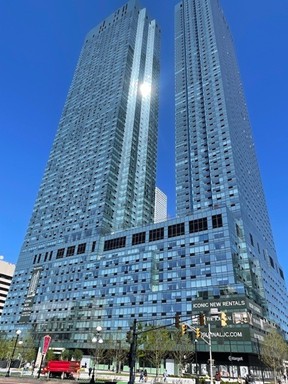
The Journal
Outlook 
Jersey City is expected to continue evolving as a high-density, transit-oriented urban market. Ongoing residential and commercial development, coupled with strong connectivity to Manhattan and constrained future hotel supply in New York City, are anticipated to support long‑term hotel demand. As population and business activity increase, these dynamics may also create opportunities for future hotel development.

At HVS, we turn data into powerful insights that drive informed decision‑making. For more information on the impact of development and redevelopment trends on hotel performance in Jersey City, please contact Patricia Shih, your New York City and Northern New Jersey hospitality expert. 
Market Report

The Growth and Reinvention of Jersey City in Northern New Jersey

May 20, 2026
Jersey City has undergone a significant transformation over the past decade, driven by extensive commercial and residential development efforts. Strong connectivity to Manhattan, combined with expansive Hudson River waterfront areas, has enhanced the city’s appeal to residents and businesses seeking accessibility to New York City with relatively lower costs.
The Jersey City skyline has blossomed into a panorama of skyscrapers during the last decade. Historically an industrial and railroad powerhouse, Jersey City has become a key cultural, financial, technological, and transportation hub. The continued growth, combined with the limited developable waterfront areas, has helped spur development projects in the more inland sections of Jersey City, such as Journal Square. Additionally, travel between Manhattan and New Jersey is efficient and easy with transportation options such as the Port Authority Trans-Hudson (PATH) rapid transit system and the Holland Tunnel.

Hotel Market Overview and Performance 

Jersey City’s hotel inventory currently comprises 2,472 guestrooms, with 785 keys added between 2017 and 2020, during the city’s last growth phase. Hotel assets in the market are predominantly branded and mostly concentrated in Downtown Jersey City, the Powerhouse Arts District, and Newport. These submarkets benefit from walkable environments, waterfront proximity, Manhattan skyline views, and convenient Manhattan access. Hotel rates in these areas remain generally more competitive than those in Manhattan, particularly during peak travel periods in the summer, as well as the months of September, October, and December.

Hotel demand is diverse. Leisure room‑night demand consists of friends and relatives of local residents, as well as domestic and international travelers seeking value‑oriented lodging near Manhattan. Commercial demand is anchored by local businesses, supplemented by business travelers visiting Manhattan who favor Jersey City’s lower congestion, calmer setting, and accessibility. Corporate and SMERFE groups further enhance demand, drawn by competitive pricing, relatively larger guestrooms, and easy access to Manhattan.

The Jersey City market has realized strengthening demand from all market segments during the post-pandemic period, due in part to the city’s continued growth and revitalization efforts. In 2019, the market achieved an occupancy of roughly 81% and an ADR of $217. Both occupancy and ADR increased from 2021 through 2024 as the new supply that opened between 2017 and 2020 fully ramped up operations. Strong ADR growth was partly attributed to heightened inflation from 2022 through early 2024. RevPAR exceeded the 2019 level in 2023. In 2025, occupancy reached 80% and ADR rose to $260, illustrating the relative strength of the market.

In August 2025, the upper-upscale, full-service Hyatt Regency Jersey City on the Hudson completed an extensive, multi-phase, multimillion-dollar renovation, which is anticipated to support the market’s continued ADR growth. In addition, a 154‑key Fairfield Inn & Suites by Marriott is under construction within the 55‑story Imperial Tower mixed‑use project in Journal Square, positioned three blocks north of the PATH station. It is poised to become the premier nationally branded hotel in Journal Square.

External Supply Constraints and Demand Spillover 

The Jersey City hotel supply may benefit indirectly from regulatory changes in New York City. The NYC Citywide Hotels Text Amendment, enacted on December 9, 2021, mandates a special permitting process and specific requirements for new hotel development. Since adoption, only four building permits for new Manhattan hotel projects have been submitted. As such, the new supply pipeline in NYC, particularly Manhattan, is expected to contract in 2028/29. Given the limitations of additional new supply, future compression within New York City may contribute to some level of demand growth for hotels in Jersey City.

Residential Development and Economic Growth 

The growth and revitalization of Jersey City are partially driven by the ongoing housing shortage in the New York City area. Greater availability of developable land, relatively lower development costs, and a less restrictive regulatory environment have enhanced Jersey City’s appeal for both commercial and residential development. New Jersey’s Aspire tax credit program has also supported development by providing gap financing for eligible commercial, mixed‑use, and residential projects.

These factors have contributed to a sustained influx of new multifamily developments, expanding housing options for new and existing New York City residents. This growing residential base strengthens Jersey City’s competitive positioning for business expansions and corporate relocations, indirectly supporting hotel demand through visitor travel, business activity, and group meetings.

Notable residential developments in the market include projects in both the waterfront and inland areas of the city, as detailed below.

Waterfront Areas 

The New Jersey Gold Coast/Hudson River waterfront sites have been the premier and most desired areas for high-end residential towers; as such, there are minimal remaining developable areas along or proximate to the waterfront in Jersey City. Two notable current development projects include the following:

  • 20 Long Slip: This is Phase I of LeFrak’s three-tower development and will comprise a 530‑unit residential tower with approximately 9,800 square feet of amenities and 2,300 square feet of ground‑floor retail. The timing for construction of the remaining two towers has not been announced.
  • Harborside 4: Developed by the Related Companies, Modon Holding, and Panepinto Properties, this project is currently under construction and slated for completion in 2029. The tower will include 800 residential units (600 rentals and 200 condominiums) and approximately 12,000 square feet of retail space.

Inland Areas 

As waterfront sites reach build‑out, inland neighborhoods such as Journal Square have emerged as key growth areas, supported by direct PATH access to Manhattan. The most notable projects are detailed as follows:

  • 180 Baldwin Avenue: In November 2025, preliminary approval was granted for a proposed six‑tower residential development featuring 2,088 units, office space, retail components, and a pedestrian plaza. The project is reportedly undergoing a redesign based on input from the local community. A construction timeline has not yet been announced.
  • The Journal (originally called One Journal Square): This recently completed luxury, mixed‑use building by the Kushner Companies includes 1,723 residential units and 45,000 square feet of amenities, along with the ground‑floor Target store and a public plaza. The PATH Journal Square Station is directly adjacent to the property.

The Journal
Outlook 
Jersey City is expected to continue evolving as a high-density, transit-oriented urban market. Ongoing residential and commercial development, coupled with strong connectivity to Manhattan and constrained future hotel supply in New York City, are anticipated to support long‑term hotel demand. As population and business activity increase, these dynamics may also create opportunities for future hotel development.

At HVS, we turn data into powerful insights that drive informed decision‑making. For more information on the impact of development and redevelopment trends on hotel performance in Jersey City, please contact Patricia Shih, your New York City and Northern New Jersey hospitality expert.