
Market Report

Why Is San Diego a Favorite Among Hotel Investors?

March 10, 2026
San Diego remains one of the West Coast’s most attractive hotel investment markets, driven by diversified demand from leisure, conventions, military, and life sciences. With roughly 45% of downtown keys owned by REITs and private equity, the market reflects strong institutional confidence, resilient performance, active transactions, and long-term growth supported by major infrastructure investments.
San Diego was the first major West Coast lodging market to rebound following the pandemic. Downtown hotels have consistently achieved occupancy levels in the high 70s, with ADR in the mid-to-high $200s. While ADR softened in 2025 due to federal budget cuts and a correction in group demand, the market remains highly attractive to a broad range of investors.

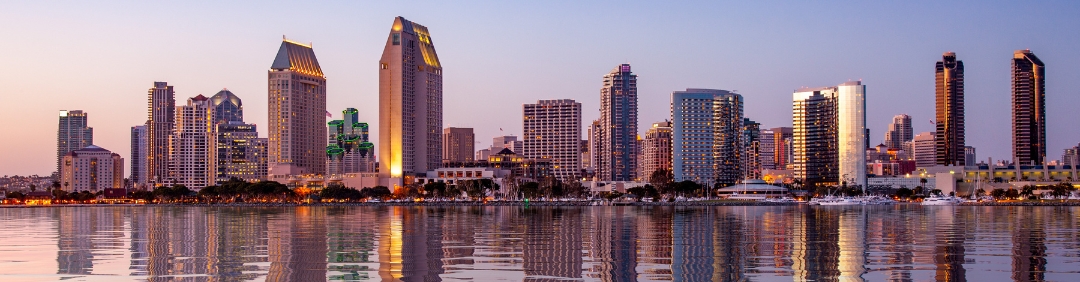
A stroll through Downtown San Diego might not reveal that roughly 45% of hotel keys are owned by REITs and private equity groups. This level of institutional ownership is not coincidental. These hotels offer the scale and performance stability that public companies and private equity investors seek. Prior to the pandemic, many downtown assets consistently achieved occupancy above 80%, supported by steady rate growth and diversified demand drivers.
Segments Fueling Sustained Hotel Demand

San Diego’s lodging demand is anchored by two primary pillars: domestic leisure travel and convention business. The city’s temperate climate, beaches, walkable urban core, vibrant culinary scene, and outdoor lifestyle—along with attractions such as Balboa Park, the San Diego Zoo, and world-class museums—make it one of California’s most popular regional getaway destinations. The market draws heavily from in-state travelers, as well as visitors from Arizona and seasonal “snowbird” markets.

The San Diego Convention Center is frequently ranked among the top five convention facilities in the nation. The downtown convention package is further strengthened by three 1,000+-room headquarters hotels and more than ten additional full-service hotels within walking distance. An expansion of the convention center is planned, although near-term legal and coastal review hurdles continue to delay progress.

Beyond tourism and conventions, San Diego benefits from a strong and resilient government sector that fills hotel rooms midweek and during shoulder months. Major military installations, shipyards, Marine Corps Air Station Miramar, and border patrol operations provide a stable employment base. These sectors have historically proven recession-resistant, as demonstrated by the market’s relatively swift recovery following both the 2009 financial crisis and the 2020 pandemic downturn.

Other important demand sectors include higher education and the region’s life-sciences cluster, which is considered one of the top three in the nation alongside Boston and the Bay Area. The University of California, San Diego (UC San Diego) consistently ranks among the top public universities in the country and serves as a major research and innovation hub.

What Should Investors Watch in 2026 and Beyond?

In the short term, the market is absorbing the opening of the 1,600-room Gaylord Pacific Resort & Convention Center in Chula Vista, which debuted in 2025 as the brand’s first West Coast location. The resort features approximately 477,000 square feet of meeting and event space, multiple dining outlets, and a large outdoor waterpark overlooking the Chula Vista Bayfront. The property has been well received by group planners and adds meaningful convention capacity to the broader market.

San Diego International Airport’s $3.8-billion Terminal 1 redevelopment, which will enhance long-term accessibility and support continued tourism growth, is progressing steadily. Phase 1A has been completed, and Phase 1B is underway. The project will ultimately deliver 30 modern gates, upgraded passenger amenities, a new parking structure, and improved roadway access, with full completion targeted for early 2028.

IQHQ’s downtown life-sciences campus, completed in 2023, has experienced slower-than-anticipated leasing due in part to large floor plates and the entrenched preference of biotech tenants for established clusters in La Jolla and Torrey Pines. However, momentum is building: the first major tenant, the J. Craig Venter Institute, signed in May 2025, leasing an entire floor for approximately 100 employees, and roughly half of the 200,000 square feet of retail space has now been committed. As the corporate segment has long been the missing component of the downtown hotel market, continued leasing momentum at IQHQ will serve as a key indicator of future lodging demand for hotel owners and operators.

Looking further ahead, the $3.6-billion Central Embarcadero redevelopment, led by 1HWY1, is advancing through California Environmental Quality Act (CEQA) review and California Coastal Commission approvals. The proposed project calls for replacing the existing Seaport Village with a mixed-use waterfront destination that may include hotels, expanded retail and dining, public parks, and cultural attractions, fundamentally reshaping the Embarcadero. Once fully built out, the project will become a critical anchor and destination in Downtown San Diego and is expected to introduce additional hotel supply, which investors should factor into their outlook for the market.

The San Diego Tourism Authority projects modest growth in lodging demand in 2026, with many market participants anticipating stronger gains in 2027 and 2028 as group demand normalizes and airport improvements are completed.

The Bottom Line

While near-term growth may moderate as the market stabilizes following new supply additions, San Diego remains one of the most active hotel transaction markets in Southern California, particularly when compared to Los Angeles and Orange County. Its diversified demand base, high institutional ownership, strong economic anchors, and long-term development pipeline continue to position the market as a preferred destination for both public and private capital.

At HVS, we turn data into powerful insights that drive your success. Our unique methodology, which involves conducting primary interviews within local markets, enables us to gather real-time insights and current data. If you are seeking to better understand the trajectory of the San Diego market, contact Kirsten Smiley, MAI, for additional insights and discussion. And to stay ahead of the evolving dynamics of any major market on a quarterly basis, consider HVS MarketCast as a valuable forecasting tool. This tailored five‑year forecast provides annual projections for occupancy, ADR, and RevPAR and is designed to equip teams with the market-specific data and forward-looking insights needed to support planning, optimize performance, and maximize profitability in major markets like San Diego.
Market Report

Why Is San Diego a Favorite Among Hotel Investors?

March 10, 2026
San Diego remains one of the West Coast’s most attractive hotel investment markets, driven by diversified demand from leisure, conventions, military, and life sciences. With roughly 45% of downtown keys owned by REITs and private equity, the market reflects strong institutional confidence, resilient performance, active transactions, and long-term growth supported by major infrastructure investments.
San Diego was the first major West Coast lodging market to rebound following the pandemic. Downtown hotels have consistently achieved occupancy levels in the high 70s, with ADR in the mid-to-high $200s. While ADR softened in 2025 due to federal budget cuts and a correction in group demand, the market remains highly attractive to a broad range of investors.

A stroll through Downtown San Diego might not reveal that roughly 45% of hotel keys are owned by REITs and private equity groups. This level of institutional ownership is not coincidental. These hotels offer the scale and performance stability that public companies and private equity investors seek. Prior to the pandemic, many downtown assets consistently achieved occupancy above 80%, supported by steady rate growth and diversified demand drivers.

Segments Fueling Sustained Hotel Demand

San Diego’s lodging demand is anchored by two primary pillars: domestic leisure travel and convention business. The city’s temperate climate, beaches, walkable urban core, vibrant culinary scene, and outdoor lifestyle—along with attractions such as Balboa Park, the San Diego Zoo, and world-class museums—make it one of California’s most popular regional getaway destinations. The market draws heavily from in-state travelers, as well as visitors from Arizona and seasonal “snowbird” markets.

The San Diego Convention Center is frequently ranked among the top five convention facilities in the nation. The downtown convention package is further strengthened by three 1,000+-room headquarters hotels and more than ten additional full-service hotels within walking distance. An expansion of the convention center is planned, although near-term legal and coastal review hurdles continue to delay progress.

Beyond tourism and conventions, San Diego benefits from a strong and resilient government sector that fills hotel rooms midweek and during shoulder months. Major military installations, shipyards, Marine Corps Air Station Miramar, and border patrol operations provide a stable employment base. These sectors have historically proven recession-resistant, as demonstrated by the market’s relatively swift recovery following both the 2009 financial crisis and the 2020 pandemic downturn.

Other important demand sectors include higher education and the region’s life-sciences cluster, which is considered one of the top three in the nation alongside Boston and the Bay Area. The University of California, San Diego (UC San Diego) consistently ranks among the top public universities in the country and serves as a major research and innovation hub.

What Should Investors Watch in 2026 and Beyond?

In the short term, the market is absorbing the opening of the 1,600-room Gaylord Pacific Resort & Convention Center in Chula Vista, which debuted in 2025 as the brand’s first West Coast location. The resort features approximately 477,000 square feet of meeting and event space, multiple dining outlets, and a large outdoor waterpark overlooking the Chula Vista Bayfront. The property has been well received by group planners and adds meaningful convention capacity to the broader market.

San Diego International Airport’s $3.8-billion Terminal 1 redevelopment, which will enhance long-term accessibility and support continued tourism growth, is progressing steadily. Phase 1A has been completed, and Phase 1B is underway. The project will ultimately deliver 30 modern gates, upgraded passenger amenities, a new parking structure, and improved roadway access, with full completion targeted for early 2028.

IQHQ’s downtown life-sciences campus, completed in 2023, has experienced slower-than-anticipated leasing due in part to large floor plates and the entrenched preference of biotech tenants for established clusters in La Jolla and Torrey Pines. However, momentum is building: the first major tenant, the J. Craig Venter Institute, signed in May 2025, leasing an entire floor for approximately 100 employees, and roughly half of the 200,000 square feet of retail space has now been committed. As the corporate segment has long been the missing component of the downtown hotel market, continued leasing momentum at IQHQ will serve as a key indicator of future lodging demand for hotel owners and operators.

Looking further ahead, the $3.6-billion Central Embarcadero redevelopment, led by 1HWY1, is advancing through California Environmental Quality Act (CEQA) review and California Coastal Commission approvals. The proposed project calls for replacing the existing Seaport Village with a mixed-use waterfront destination that may include hotels, expanded retail and dining, public parks, and cultural attractions, fundamentally reshaping the Embarcadero. Once fully built out, the project will become a critical anchor and destination in Downtown San Diego and is expected to introduce additional hotel supply, which investors should factor into their outlook for the market.

The San Diego Tourism Authority projects modest growth in lodging demand in 2026, with many market participants anticipating stronger gains in 2027 and 2028 as group demand normalizes and airport improvements are completed.

The Bottom Line

While near-term growth may moderate as the market stabilizes following new supply additions, San Diego remains one of the most active hotel transaction markets in Southern California, particularly when compared to Los Angeles and Orange County. Its diversified demand base, high institutional ownership, strong economic anchors, and long-term development pipeline continue to position the market as a preferred destination for both public and private capital.

At HVS, we turn data into powerful insights that drive your success. Our unique methodology, which involves conducting primary interviews within local markets, enables us to gather real-time insights and current data. If you are seeking to better understand the trajectory of the San Diego market, contact Kirsten Smiley, MAI, for additional insights and discussion. And to stay ahead of the evolving dynamics of any major market on a quarterly basis, consider HVS MarketCast as a valuable forecasting tool. This tailored five‑year forecast provides annual projections for occupancy, ADR, and RevPAR and is designed to equip teams with the market-specific data and forward-looking insights needed to support planning, optimize performance, and maximize profitability in major markets like San Diego.