
Market Report

The Life of a Slipper: Spa & Wellness Form and Function

February 27, 2026
The simple choice between disposable or reusable spa slippers reveals the deeper relationship between form, function, sustainability, and brand identity in spa and wellness design. By examining this micro decision, this article highlights how small details illustrate the relationship among guest experience, operational flow, and the financial performance of a resort spa or wellness center.
In resort development, the spa department, lifestyle amenities, or wellness spaces are no longer a “bonus” amenity. Rather, they are a revenue engine, a brand signature, and increasingly, a core component of a property’s identity. Yet many lodging and recreational projects still fall into a familiar trap: they prioritize either visual drama over operational logic, or operational efficiency over emotional resonance. The result is a space that looks good but struggles to deliver consistent guest satisfaction, or one that operates with the soulless efficiency of a trauma clinic. The most effective way to create the optimal lifestyle space is to zoom in on the smallest decisions—because in lifestyle-center design, the micro reveals the macro.

Small Details, Big Impact: The Slipper Question

One of the clearest examples of this micro/macro dance can be illustrated by a deceptively simple question: Should a spa use disposable or reusable slippers?

This single choice exposes the entire ecosystem of form, function, brand positioning, sustainability, and operational flow. For resort developers, understanding this relationship early is the difference between a lifestyle center that elevates the asset’s performance and one that that becomes a problematic cost center.

Most resort and hotel development is evaluated through the lens of capital expenditure, construction timelines, and projected revenue per square foot. Lifestyle components of a resort or hotel also depend on how well the physical environment supports both the guests’ journey and the staff’s ability to support that journey. In this context, the journey is both physical and emotional, focused on relaxation and possibly insight.

The slipper decision is a perfect case study because it touches virtually every part of the development process: brand identity, back-of-house (BOH) functional areas, sustainable sensibilities, laundry requirements, storage requirements, and operating expenses. If a team can thoughtfully navigate this one detail, they are far more likely to make sound decisions about more important issues like hydrothermal circuits, locker-room layouts, treatment-room adjacencies, and relaxation zones.

This diligence can extend into other areas of the hotel, including the public spaces, guestrooms, and food and beverage departments. When done thoughtfully, the guest experience is curated through the brand standards and is cohesively integrated into all aspects of the stay. This not only positively affects guests’ perception of the facility but can easily enhance incremental revenue. For example, dedicated alcoves strategically designed into the property for hydration stations telegraph to guests that they are cared for. That single point of caring can be echoed throughout the property design, creating a desire to not only purchase branded items (like reusable spa slippers), but to become a repeat guest and ambassador of the establishment as well.

Designing a spa or wellness center is an exercise in balancing aesthetics with both purpose and price. From the curve of a relaxation lounger to the scent of the spa itself, it must serve both the guest’s experience and the operational realities behind the scenes. Most guests have no concept of the iterative analysis that exists behind evaluating space utilization and product selection—such as reusable vs. disposable slippers. While it may sound trivial at first, that single choice ripples through design, workflow, sustainability goals, guest psychology, and brand positioning. In many ways, the slipper becomes a microcosm of the spa or resort’s entire design philosophy.

The Form–Function Equation

As a level-setting device, let us be clear that, in this analysis, “form” refers to the sensory and aesthetic qualities that shape how a guest feels, while “function” refers to the operational systems that make the experience possible, which includes cleaning, storage, staffing, circulation, cost, and safety.

A well-designed spa harmonizes form and function, whereas a poorly designed spa forces one to compensate for the other. Too much emphasis on form and limited regard for function results in beautiful spaces that bottleneck operations, frustrate staff, or create hygiene risks. Conversely, too much function over form has the potential to create an efficient and soulless environment that fails to ignite a journey of discovery and wonderment.

Compromises along the way—with respect to timing, budget, owner’s preference, competitive market forces, environmental issues, and technological advancements—transform this analysis into a high-wire balancing act where the “best” outcome is the one that finds the optimal balance among competing variables and desired outcomes. The slipper decision forces designers and operators to confront this balance early and honestly.

Design Thinking and Brand Messaging

Curating the guest’s journey is an exercise in “design thinking”; it includes the arrival, the locker-room transition, treatment areas, thermal or hydrotherapy circuit, and relaxation time prior to departure and should be seamlessly part of the branded experience. Brand anomalies weaken the brand experience and confuse the guest.

To that end, before committing to a disposable or reusable slipper, the property’s identity should be articulated. For example, is the property positioning itself as eco-luxury, ultra-premium, family-friendly, or wellness-forward? Each of these configurations comes with customer expectations. Furthermore, does the center promise ritual, rejuvenation, clinical precision, or nature immersion? Disposable and reusable slippers each convey different brand messaging; disposable slippers often signal convenience, hygiene, and a high volume of guests, whereas reusable slippers communicate sustainability, craftsmanship, and elevated touchpoints.

Operational Compromises

Furthermore, operational issues must be considered. One example is a wellness environment with extensive hydrotherapy offerings where reusable slippers are the optimal choice because disposable slippers can become wet and flimsy. The choice should align with the story the spa wants guests to understand the moment they step inside. However, difficult compromises are often part of a robust charette process.

For instance, an owner may opt for disposable slippers even though they are creating a luxury hydro-oriented environment where the reusable option might appear to be the obvious default. A facility with limited BOH space or no onsite laundry may find reusable slippers impractical, no matter how beautiful they look. The “greenest” option depends on local utilities, laundry technology, and the resort’s broader sustainability commitments. Financial-sensitivity analysis might show that the BOH sanitation and storage space for reusable slippers may be better allocated to front-of-the-house revenue opportunities. A water-resistant disposable slipper may be a viable compromise.

Operational realities can compromise the guest experience. Here is where function actually asserts itself.

Disposable. When choosing disposable slippers, the owner must consider storage space for bulk inventory, waste management and disposal frequency, procurement and supply chain reliability, cost per guest and impact on margins, and environmental footprint. Disposable slippers generate significant waste, especially in high-volume spas.

Reusable. When choosing reusable slippers, considerations include laundry capacity and turnaround time, dedicated storage for clean and used slippers, staff workflow for collection and redistribution, replacement cycles, and wear patterns, as well as hygiene protocols and guest perception. Reusable slippers reduce waste but increase water and energy consumption through laundering.

Once the slipper type is chosen, the physical environment must support it. This step often reveals the deeper truth: sustainability is a design system, not a specific product choice. Disposable slippers require shelving or cubbies for high-volume storage, easy-access distribution points for therapists and attendants, and waste bins discreetly integrated into locker rooms. On the other hand, reusable slippers require laundry chute or collection points, BOH circulation paths that avoid guest areas, ventilated storage for clean slippers, and space for backup inventory during peak occupancy.

Collaboration, Interconnectedness, and Financial Impact

The design team must collaborate on all of these factors because a beautiful locker room that lacks space for slipper storage or slipper return is a design failure. The ultimate step in this algorithm is a financial feasibility check, as the slipper decision affects the cost per occupied treatment room, retail opportunities (e.g., branded slippers), laundry labor needs, storage, replacement cycles, waste management fees, and guest satisfaction scores. The slipper can become a line item that influences pricing strategy and ultimately profitability. A 20-room spa operating at 80% occupancy will distribute tens of thousands of slippers annually. The financial implications are real and measurable.

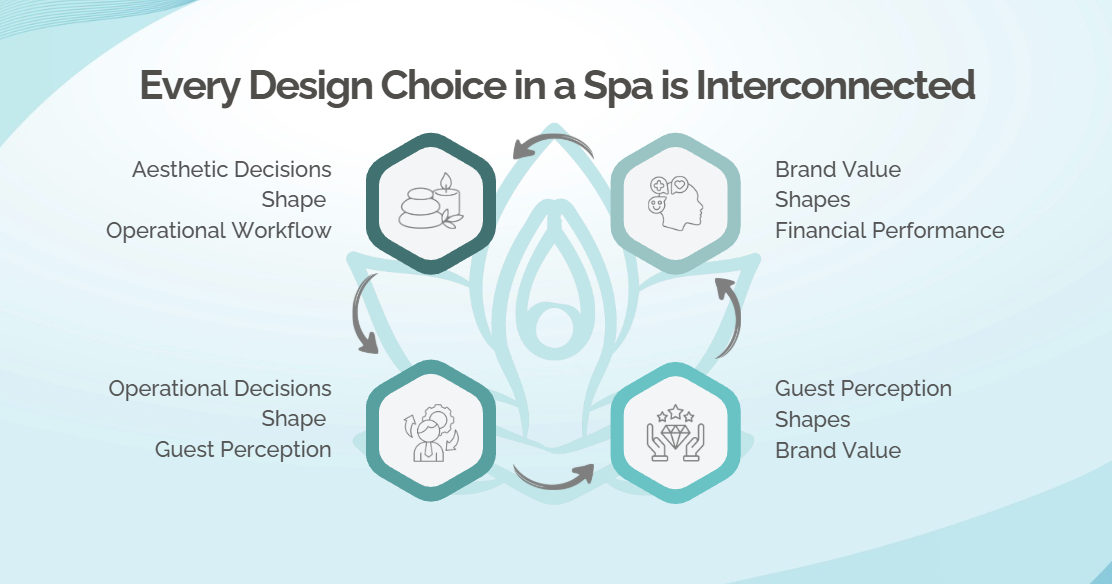
The slipper example illustrates a broader truth that every design choice in a spa is interconnected because aesthetic decisions shape operational workflows, operational decisions shape guest perception, guest perception shapes brand value, and brand value shapes financial performance.
When form and function are aligned, the spa feels effortlessly calm for the guest, efficient for the team, and profitable for the owner. When they are misaligned, friction appears everywhere.

The Slipper Question: Bottom Line

The slipper is not just a slipper; rather, it is a design philosophy test. In the end, the relationship between form and function is not a compromise—it is a partnership. And the most successful spas are the ones where even the smallest details reflect harmony in this relationship.
Market Report

The Life of a Slipper: Spa & Wellness Form and Function

February 27, 2026
The simple choice between disposable or reusable spa slippers reveals the deeper relationship between form, function, sustainability, and brand identity in spa and wellness design. By examining this micro decision, this article highlights how small details illustrate the relationship among guest experience, operational flow, and the financial performance of a resort spa or wellness center.
In resort development, the spa department, lifestyle amenities, or wellness spaces are no longer a “bonus” amenity. Rather, they are a revenue engine, a brand signature, and increasingly, a core component of a property’s identity. Yet many lodging and recreational projects still fall into a familiar trap: they prioritize either visual drama over operational logic, or operational efficiency over emotional resonance. The result is a space that looks good but struggles to deliver consistent guest satisfaction, or one that operates with the soulless efficiency of a trauma clinic. The most effective way to create the optimal lifestyle space is to zoom in on the smallest decisions—because in lifestyle-center design, the micro reveals the macro.

Small Details, Big Impact: The Slipper Question

One of the clearest examples of this micro/macro dance can be illustrated by a deceptively simple question: Should a spa use disposable or reusable slippers?

This single choice exposes the entire ecosystem of form, function, brand positioning, sustainability, and operational flow. For resort developers, understanding this relationship early is the difference between a lifestyle center that elevates the asset’s performance and one that that becomes a problematic cost center.

Most resort and hotel development is evaluated through the lens of capital expenditure, construction timelines, and projected revenue per square foot. Lifestyle components of a resort or hotel also depend on how well the physical environment supports both the guests’ journey and the staff’s ability to support that journey. In this context, the journey is both physical and emotional, focused on relaxation and possibly insight.

The slipper decision is a perfect case study because it touches virtually every part of the development process: brand identity, back-of-house (BOH) functional areas, sustainable sensibilities, laundry requirements, storage requirements, and operating expenses. If a team can thoughtfully navigate this one detail, they are far more likely to make sound decisions about more important issues like hydrothermal circuits, locker-room layouts, treatment-room adjacencies, and relaxation zones.

This diligence can extend into other areas of the hotel, including the public spaces, guestrooms, and food and beverage departments. When done thoughtfully, the guest experience is curated through the brand standards and is cohesively integrated into all aspects of the stay. This not only positively affects guests’ perception of the facility but can easily enhance incremental revenue. For example, dedicated alcoves strategically designed into the property for hydration stations telegraph to guests that they are cared for. That single point of caring can be echoed throughout the property design, creating a desire to not only purchase branded items (like reusable spa slippers), but to become a repeat guest and ambassador of the establishment as well.

Designing a spa or wellness center is an exercise in balancing aesthetics with both purpose and price. From the curve of a relaxation lounger to the scent of the spa itself, it must serve both the guest’s experience and the operational realities behind the scenes. Most guests have no concept of the iterative analysis that exists behind evaluating space utilization and product selection—such as reusable vs. disposable slippers. While it may sound trivial at first, that single choice ripples through design, workflow, sustainability goals, guest psychology, and brand positioning. In many ways, the slipper becomes a microcosm of the spa or resort’s entire design philosophy.

The Form–Function Equation

As a level-setting device, let us be clear that, in this analysis, “form” refers to the sensory and aesthetic qualities that shape how a guest feels, while “function” refers to the operational systems that make the experience possible, which includes cleaning, storage, staffing, circulation, cost, and safety.

A well-designed spa harmonizes form and function, whereas a poorly designed spa forces one to compensate for the other. Too much emphasis on form and limited regard for function results in beautiful spaces that bottleneck operations, frustrate staff, or create hygiene risks. Conversely, too much function over form has the potential to create an efficient and soulless environment that fails to ignite a journey of discovery and wonderment.

Compromises along the way—with respect to timing, budget, owner’s preference, competitive market forces, environmental issues, and technological advancements—transform this analysis into a high-wire balancing act where the “best” outcome is the one that finds the optimal balance among competing variables and desired outcomes. The slipper decision forces designers and operators to confront this balance early and honestly.

Design Thinking and Brand Messaging

Curating the guest’s journey is an exercise in “design thinking”; it includes the arrival, the locker-room transition, treatment areas, thermal or hydrotherapy circuit, and relaxation time prior to departure and should be seamlessly part of the branded experience. Brand anomalies weaken the brand experience and confuse the guest.

To that end, before committing to a disposable or reusable slipper, the property’s identity should be articulated. For example, is the property positioning itself as eco-luxury, ultra-premium, family-friendly, or wellness-forward? Each of these configurations comes with customer expectations. Furthermore, does the center promise ritual, rejuvenation, clinical precision, or nature immersion? Disposable and reusable slippers each convey different brand messaging; disposable slippers often signal convenience, hygiene, and a high volume of guests, whereas reusable slippers communicate sustainability, craftsmanship, and elevated touchpoints.

Operational Compromises

Furthermore, operational issues must be considered. One example is a wellness environment with extensive hydrotherapy offerings where reusable slippers are the optimal choice because disposable slippers can become wet and flimsy. The choice should align with the story the spa wants guests to understand the moment they step inside. However, difficult compromises are often part of a robust charette process.

For instance, an owner may opt for disposable slippers even though they are creating a luxury hydro-oriented environment where the reusable option might appear to be the obvious default. A facility with limited BOH space or no onsite laundry may find reusable slippers impractical, no matter how beautiful they look. The “greenest” option depends on local utilities, laundry technology, and the resort’s broader sustainability commitments. Financial-sensitivity analysis might show that the BOH sanitation and storage space for reusable slippers may be better allocated to front-of-the-house revenue opportunities. A water-resistant disposable slipper may be a viable compromise.

Operational realities can compromise the guest experience. Here is where function actually asserts itself.

Disposable. When choosing disposable slippers, the owner must consider storage space for bulk inventory, waste management and disposal frequency, procurement and supply chain reliability, cost per guest and impact on margins, and environmental footprint. Disposable slippers generate significant waste, especially in high-volume spas.

Reusable. When choosing reusable slippers, considerations include laundry capacity and turnaround time, dedicated storage for clean and used slippers, staff workflow for collection and redistribution, replacement cycles, and wear patterns, as well as hygiene protocols and guest perception. Reusable slippers reduce waste but increase water and energy consumption through laundering.

Once the slipper type is chosen, the physical environment must support it. This step often reveals the deeper truth: sustainability is a design system, not a specific product choice. Disposable slippers require shelving or cubbies for high-volume storage, easy-access distribution points for therapists and attendants, and waste bins discreetly integrated into locker rooms. On the other hand, reusable slippers require laundry chute or collection points, BOH circulation paths that avoid guest areas, ventilated storage for clean slippers, and space for backup inventory during peak occupancy.

Collaboration, Interconnectedness, and Financial Impact

The design team must collaborate on all of these factors because a beautiful locker room that lacks space for slipper storage or slipper return is a design failure. The ultimate step in this algorithm is a financial feasibility check, as the slipper decision affects the cost per occupied treatment room, retail opportunities (e.g., branded slippers), laundry labor needs, storage, replacement cycles, waste management fees, and guest satisfaction scores. The slipper can become a line item that influences pricing strategy and ultimately profitability. A 20-room spa operating at 80% occupancy will distribute tens of thousands of slippers annually. The financial implications are real and measurable.

The slipper example illustrates a broader truth that every design choice in a spa is interconnected because aesthetic decisions shape operational workflows, operational decisions shape guest perception, guest perception shapes brand value, and brand value shapes financial performance.
When form and function are aligned, the spa feels effortlessly calm for the guest, efficient for the team, and profitable for the owner. When they are misaligned, friction appears everywhere.

The Slipper Question: Bottom Line

The slipper is not just a slipper; rather, it is a design philosophy test. In the end, the relationship between form and function is not a compromise—it is a partnership. And the most successful spas are the ones where even the smallest details reflect harmony in this relationship.