
Climate Risk and Resilience
The Caribbean is disproportionately affected by climate-related hazards such as hurricanes, coastal erosion, sea-level rise, heat waves, and freshwater shortages. Sustainable development must actively incorporate resilience planning to protect both assets and communities. The following strategies can help mitigate these risks:
- Elevated and reinforced structures: New builds increasingly integrate hurricane-resistant engineering, flood-proofing, and elevated mechanical systems.
- Nature-based defenses: Mangrove restoration, coral reef rehabilitation, and dune stabilization reduce storm-surge impacts while enhancing biodiversity.
- Water security investments: Rainwater harvesting, greywater-reuse systems, and advanced desalination technologies reduce operational risk for water-stressed islands.
- Climate-responsive design: Orientation, shading, and passive cooling strategies reduce energy loads while improving guest comfort.
Energy Planning and Utilization
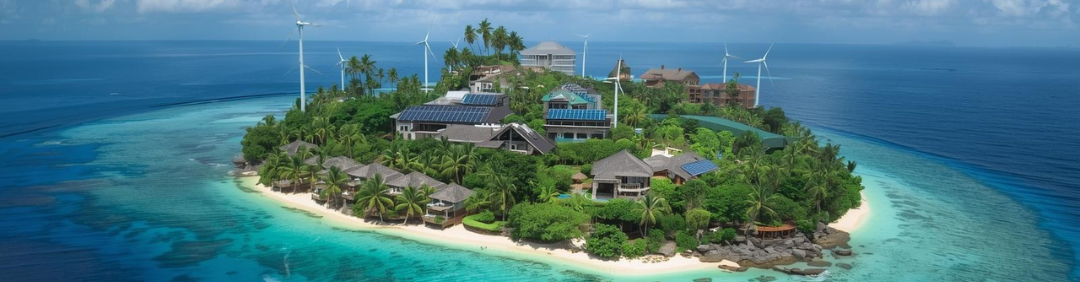
Energy is one of the Caribbean’s largest operating expenses, driven by dependence on imported fossil fuels. Transitioning to renewable and efficient systems is both a sustainability strategy and a cost-containment measure. Some examples to harness the energy issue include the following:
- Solar PV and battery storage: Many resorts now offset 20–80% of their energy demand.
- High-efficiency HVAC and smart controls: Given the region’s cooling requirements, efficient air-conditioning systems and occupancy-sensing controls deliver substantial savings.
- Microgrids: Hybrid renewable microgrids improve reliability in islands with unstable grids.
- Green building certifications: LEED, EDGE, and Green Globe are increasingly used to standardize energy performance.
Water, Waste, and Circularity: Building Closed-Loop Systems
Tourism facilities are intensive users of water, single-use plastics, and imported goods. Caribbean islands, particularly those with limited landfill capacity, require hospitality businesses to adopt circular resource management.
- Advanced wastewater treatment: Smaller islands often lack adequate local systems; onsite treatment enables safe reuse for irrigation and reduces marine pollution.
- Rainwater harvesting: Collecting rainwater reduces reliance on local supply.
- Greywater reuse: Greywater can be used for landscaping irrigation.
- Low-flow fixtures: Fixtures designed to limit flow lower overall water use.
- Composting and biodigesters: Resorts can convert food waste into soil enhancers or biogas, supporting local agriculture and reducing landfill loads.
- Eliminating single-use plastics: Refillable amenities and reusable alternatives are a cost-effective choice.
- Sustainable procurement: Local sourcing of food, materials, and furnishings reduces carbon footprint and deepens community engagement.
Community Integration and Social Sustainability
Sustainable development must extend beyond environmental performance to create positive socioeconomic impact. Caribbean hospitality depends fundamentally on community partnerships. Sustainable projects increasingly emphasize local procurement, workforce development, and cultural integration, including the initiatives listed below.
- Local workforce development: Training programs in hospitality, renewable-energy systems, culinary arts, and management strengthen the local talent pipeline.
- Fair-wage employment and career mobility: Retention and service quality improve when staff have long-term growth opportunities.
- Community-owned tourism products: Resorts increasingly partner with local craftspeople, tour operators, and farmers to enrich guest experiences and diversify community income.
- Cultural heritage preservation: Architectural decisions and programming that reflect local identity foster authenticity and reduce the homogeneity typical in global resort development.
Financing the Sustainable Transition
Sustainable hotel development often requires higher upfront investment but yields long-term operational savings and stronger asset value. New financing mechanisms are helping to bridge this gap. Some emerging financing tools and value benefits are as follows:
- Green and blue bonds: These bonds support projects that protect marine ecosystems or reduce carbon emissions.
- Concessional climate finance: Multilateral organizations provide low-interest loans for renewable energy and resilience upgrades.
- Sustainability-linked loans: These loans offer rate reductions tied to measurable performance indicators.
- Public–private partnerships: Governments provide incentives for developments that align with national sustainability goals.
- Government incentives: These include tax credits, duty waivers, and fast-track permitting.
- Lower operating costs: Energy and water savings help reduce operational costs.
- Reduced insurance premiums: Lower risk, climate-resilient assets pay lower premiums.
Guest Expectations and Market Positioning
Today’s travelers—especially in the luxury, adventure, and millennial segments—expect sustainability to be embedded in the guest experience rather than added as an afterthought. Guest-facing initiatives include the following:
- Transparency about energy and water initiatives
- Opportunities to participate in conservation activities
- Locally curated culinary and cultural experiences
- Visible commitment to reducing waste and protecting ecosystems
- Certifications and third-party validation
Conclusion
Sustainable hotel and resort development in the Caribbean is no longer merely an environmental responsibility; it is now a strategic imperative that strengthens operational performance, asset resilience, community prosperity, and long-term competitive advantage. The most successful players in the region will be those who adopt a regenerative mindset, designing projects that restore ecosystems, uplift local communities, and create hotels that are not just less harmful but truly beneficial. For developers, operators, and investors, the opportunity is profound: to build a Caribbean hospitality sector that is resilient, profitable, and aligned with the future expectations of travelers and stakeholders alike.At HVS, we turn data into powerful insights that drive your success. Our unique methodology, which involves conducting primary interviews within local markets, enables us to gather real-time insights and current data. This approach ensures an in-depth understanding of each market we operate in, giving you a distinct competitive edge. For more information about the Caribbean region or for details about a specific Caribbean market, we invite you to reach out to Shannon Sampson, your HVS Caribbean leader.